

Well-controlled development of a new concrete binder

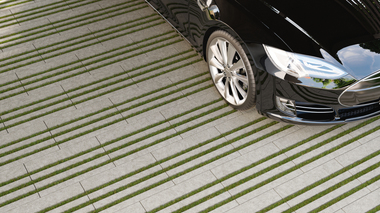
In the Netherlands, Cementbouw started 10 years ago with the development of an alternative binder for concrete with the lowest possible CO₂ footprint. After several years of lab research, a first concept was ready for market implementation under the name of Sqape. The application was the production of paving blocks.
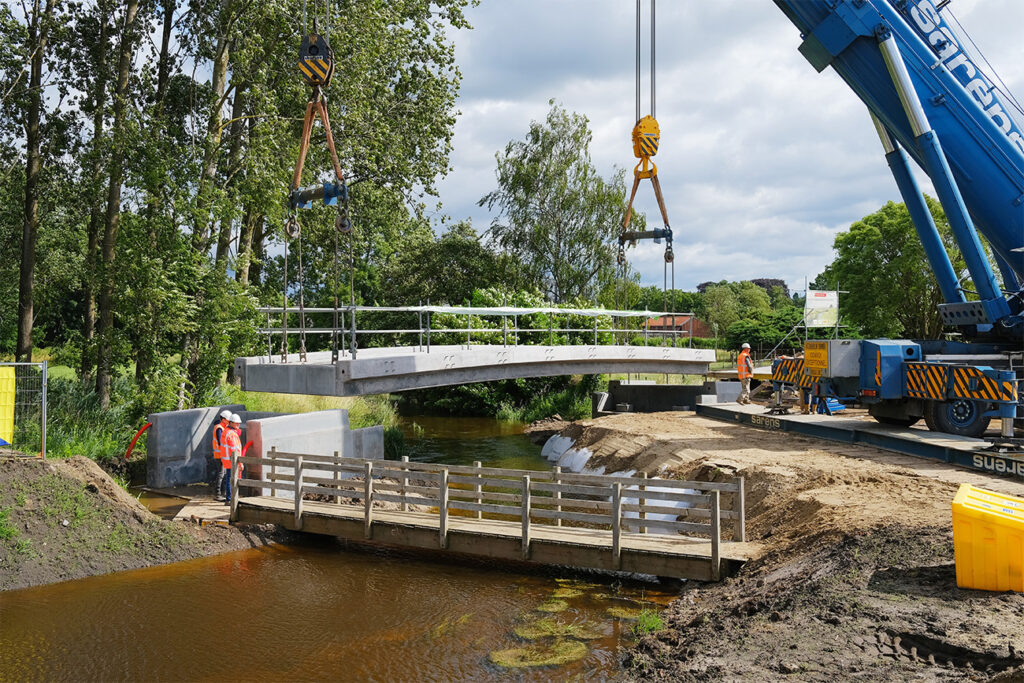
At the same time, other applications were developed. As a next step, road pavings and floors were constructed in ready mix geopolymer concrete. These projects were also well prepared, executed and monitored. The shot for the moon was a post-tensioned bicycle bridge with a service life of 100 years and positioned in a Natura 2000 area. The list of relevant material parameters was more than 40 long. From start to finish, all relevant parties were involved to define and accept the equivalent performance study.
After a successful completion, a next milestone was reached; a sea harbour quay wall in Rotterdam, built partially in precast steel fibre reinforced geopolymer concrete (GPC). The backfill of these skirts was also cast in GPC. Special attention was paid to seawater resistance, chloride ingress and the protection of steel inserts, for example bollards.
In the meantime, the German concrete producer Rinn Beton und Naturstein has implemented the technology to produce the most sustainable landscaping products; the Klimastein.
These milestones were reached after thorough laboratory testing, listening to principals, clients and authorities, addressing all requirements and by managing risk and safety. It has appeared that the application of a new binder in complex situations is possible by proving equivalent performance (or rather ‘fit for purpose’) as described in the Eurocode. Of course, it will be much easier to have a technical standard and prove compliance. Therefore, in the Netherlands and Belgium, we are working on national standards for geopolymer concrete. Also, we contribute to a technical report (TR) on the European level to prepare a standard for alkali activated cement. This will make implementation much easier, but we do not have to wait for it to further grow this technology.