

Dutch experience with AAC for structural applications: Challenges in structural design

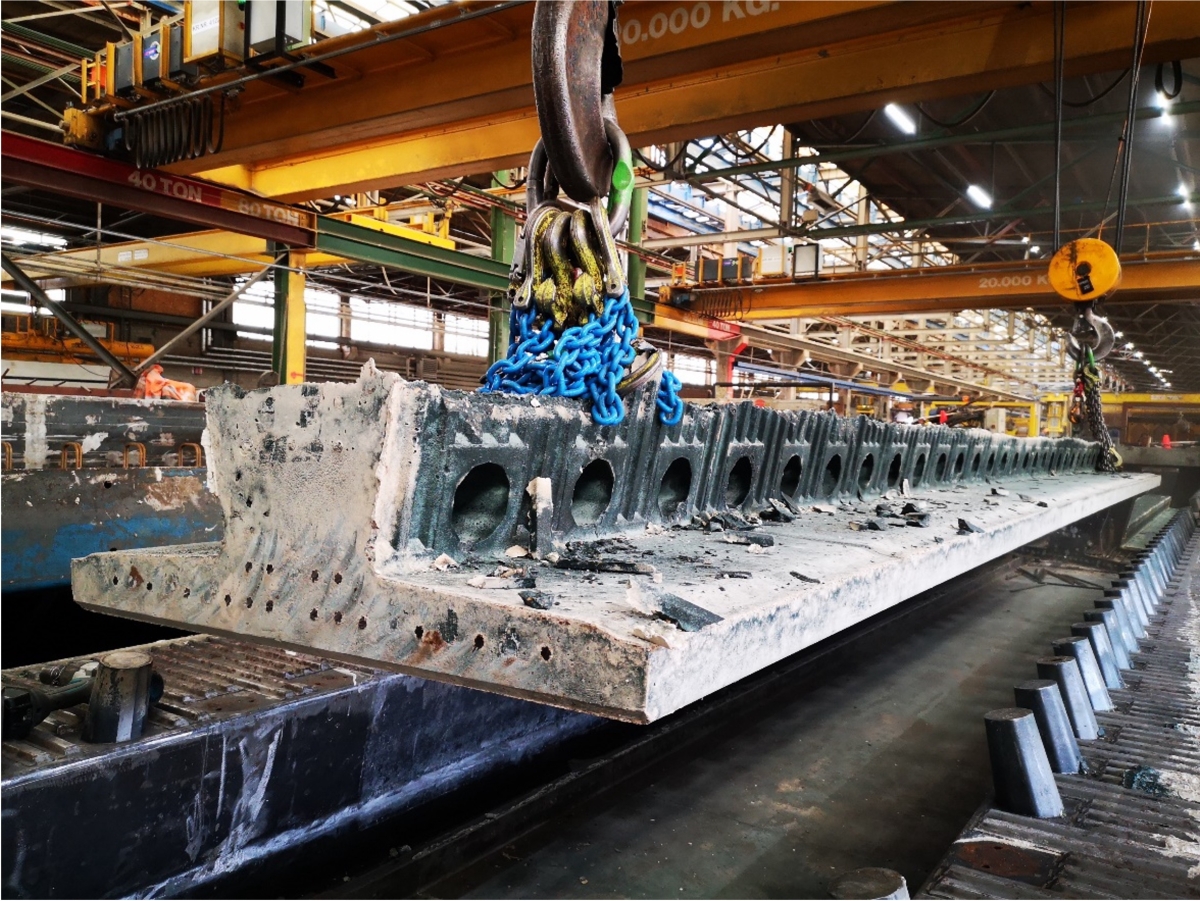
Alkali-activated concrete (AAC) is a type of concrete where the Portland cement–based binder is substituted by an alternative, alkali-activated binder and as such is promising for reducing CO₂ emissions emitted by concrete production. Despite the extensive investigation of the material properties of AAC, challenges still exist in taking a step further toward large-scale field application. One of the reasons is a lack of knowledge with respect to the (long-term) material and structural behaviour and large-scale production and upscaling of AAC. This presentation shows Dutch experience with structural applications of AAC, addressing both reinforced and prestressed AAC members.
First, a joint research project involving TU Delft, Ghent University, Haitsma Beton and the Province of Fryslân is introduced, aiming at the upscaling of prestressed AAC. In this project, material development was combined with full-scale testing to investigate both short-term and long-term structural behaviour of AAC bridge girders, as well as the short-term behaviour of a full-scale mock-up bridge deck. Second, results from research conducted within 4TU.Bouw-funded GeoCon and EU-funded AshCycle projects, focusing on the long-term structural behaviour of reinforced AAC members, are presented. Finally, a critical review of the bond behaviour between AAC and reinforcement is presented, carried out within the framework of the RILEM Technical Committee Mechanical Properties of AAC. Lessons learned from experimental and practical applications are discussed, together with recommendations for structural design with AAC.