


3D concrete printing in practical examples – “There is no one size fits all”


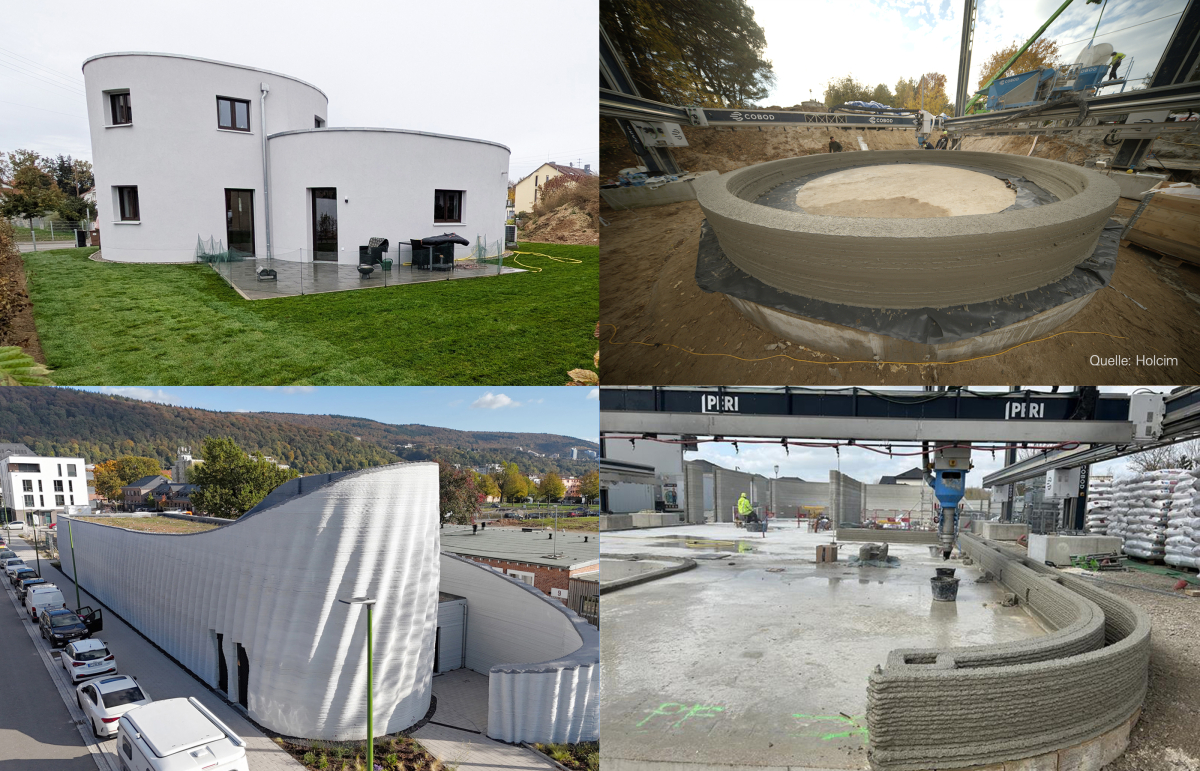
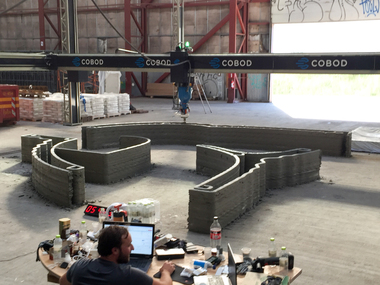
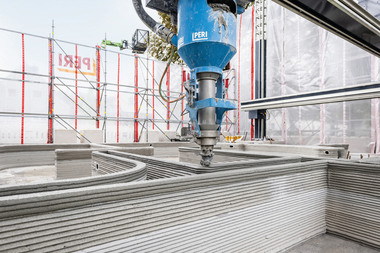
As with any construction project, the same applies to 3D concrete printing: there is no “one size fits all.” Our examples using the Cobod BOD2 portal system show that the desired appearance, statics, and construction process jointly determine the choice of materials and the characteristics of the printing process.
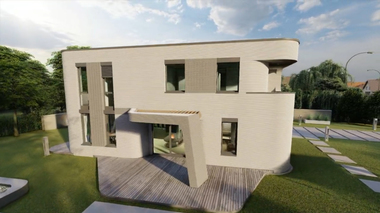
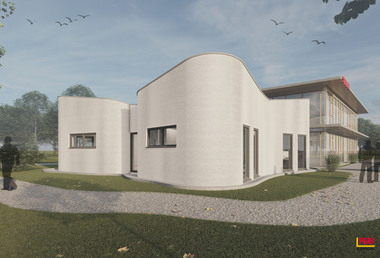
The parametrically designed Wavehouse in Heidelberg (2023) stands for design freedom, complex geometries, overhangs, and a 54 m long building envelope that was produced on site with dry mortar. In contrast, regionality and scalability were the focus of the apartment building in Bezannes, France (2025). Here, load-bearing walls were printed from standard-compliant concrete, paired with a facing shell for an efficient insulation process.
If a conventional look is to be combined with round shapes, the project in Witzighausen (2024) shows how walls printed from dry concrete serve as permanent formwork, equipped with a composite thermal insulation system.
Based on this, straight structures can be printed as solid walls – without cavities for insulation or in-situ concrete cores. This has been implemented, for example, in a printed water tank in Poland (2024) and in an apartment building in Illertissen (2025). The latter was not implemented with a portal system, but with a mobile printing system.
Overall, therefore, none of the variants is fundamentally superior. The decisive factor for faster and cheaper projects compared to conventional construction methods is the project-specific combination of system, material, process, and construction sequence. That is why we have developed optimized building concepts, such as the Dreihaus or the Ready2print catalog, which bundle recurring principles for planning and execution and enable up to 10% lower construction costs and 30% faster execution. In Heidelberg (2025), Dreihaus will be printed serially three times directly next to each other for the first time – demonstrating that “no one size fits all” can also be thought of in scalable terms.