

Prestressed Concrete Sleepers in Mass Production – Process Reliability for High-Load Precast Concrete Components
Prestressed concrete sleepers are among the most demanding mass-produced components in the precast concrete industry. Material, geometry, prestressing, and quality assurance must all interact with great precision. Sleeper production is therefore a clear example of how mass production, automation, and quality assurance work together in the manufacture of precast concrete components subjected to high loads.

Prestressed concrete sleepers are among the most demanding mass-produced components in the precast concrete industry. At first glance, they appear to be robust standard components: approximately 2.60 m long, prestressed, and manufactured in large quantities. In reality, however, the material, geometry, prestressing, and quality assurance must all work together with great precision. For the precast concrete industry, sleeper production is therefore a clear example of how mass production, automation, and quality assurance work together for high-load components.

On the track, prestressed concrete sleepers fulfill a safety-critical function. They maintain the track alignment, distribute dynamic loads into the ballast, and must function reliably over a required service life of at least 40 years. In doing so, the sleeper is among the concrete components subjected to the highest dynamic loads of all. Over its service life, millions of load cycles pass over it; every train sets the component into vibration anew. Added to this is a precision requirement that is unusual in traditional concrete construction: While a tolerance of about 1 cm may be acceptable for many concrete components, prestressed concrete ties require an accuracy of 1/10 mm. The tie is thus both a mass-produced product and a high-precision component.

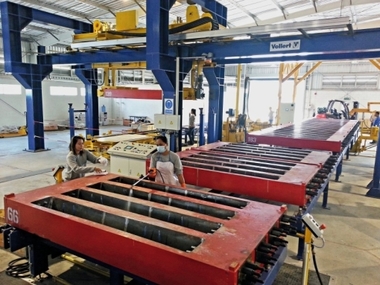
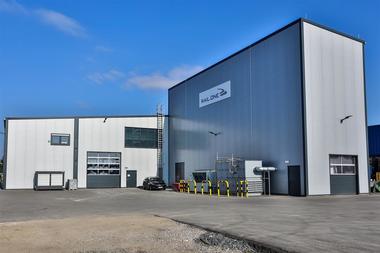
Since September 2026, the name Moll Rail has stood for the rail infrastructure activities of Leonhard Moll AG. The new brand identity highlights what the company has been focusing its production on for years: industrial process reliability, technical precision, and dependable quality for rail infrastructure. At its Biebesheim site near Frankfurt, Moll Rail has tailored its sleeper production to precisely this combination of capacity, process stability, and quality assurance. A highly automated production facility has been established on approximately 40,000 m², which, depending on the production schedule, manufactures up to 2,000 prestressed concrete sleepers per day in two shifts.


Mass Production with Tight Tolerances

In many sectors of the precast concrete industry, automation is seen as the solution to labor shortages, cost pressures, and increasing demands for reproducibility. In sleeper production, another factor comes into play: The product is highly standardized and strictly defined by customer specifications, approvals, and regulations. Consequently, scope for development often lies less in the component itself than in process control.

This is particularly true for standard products such as the B 70, a prestressed concrete sleeper widely used in the German rail network. Geometry, material requirements, mix design specifications, embedded parts, and testing procedures are largely predetermined. The industrial challenge, therefore, lies in manufacturing this component in high volumes, with consistent quality, and at a stable cost structure. Automation does not automatically guarantee quality. It first creates the conditions for repeatable processes.

Whether this results in a stable production process depends on many factors: the condition of the molds, cleaning before the next cycle, dosing, uniform concrete distribution, temperature control, prestressing, the precise positioning of embedded parts, demolding, curing, testing, and documentation. Each of these factors can be controlled individually. Taken together, however, they determine whether a line runs stably across many shifts or whether rework, scrap, or cycle interruptions occur. In such a production environment, quality is not “inspected into” the product at the end, but is built into the process as it proceeds.

In this context, Industrial Excellence means process mastery. This refers to the ability to maintain long-term control over safety-critical series production: with stable cycle times, defined checkpoints, qualified maintenance, robust quality assurance, and trained personnel.


Automation Changes the Testing Logic

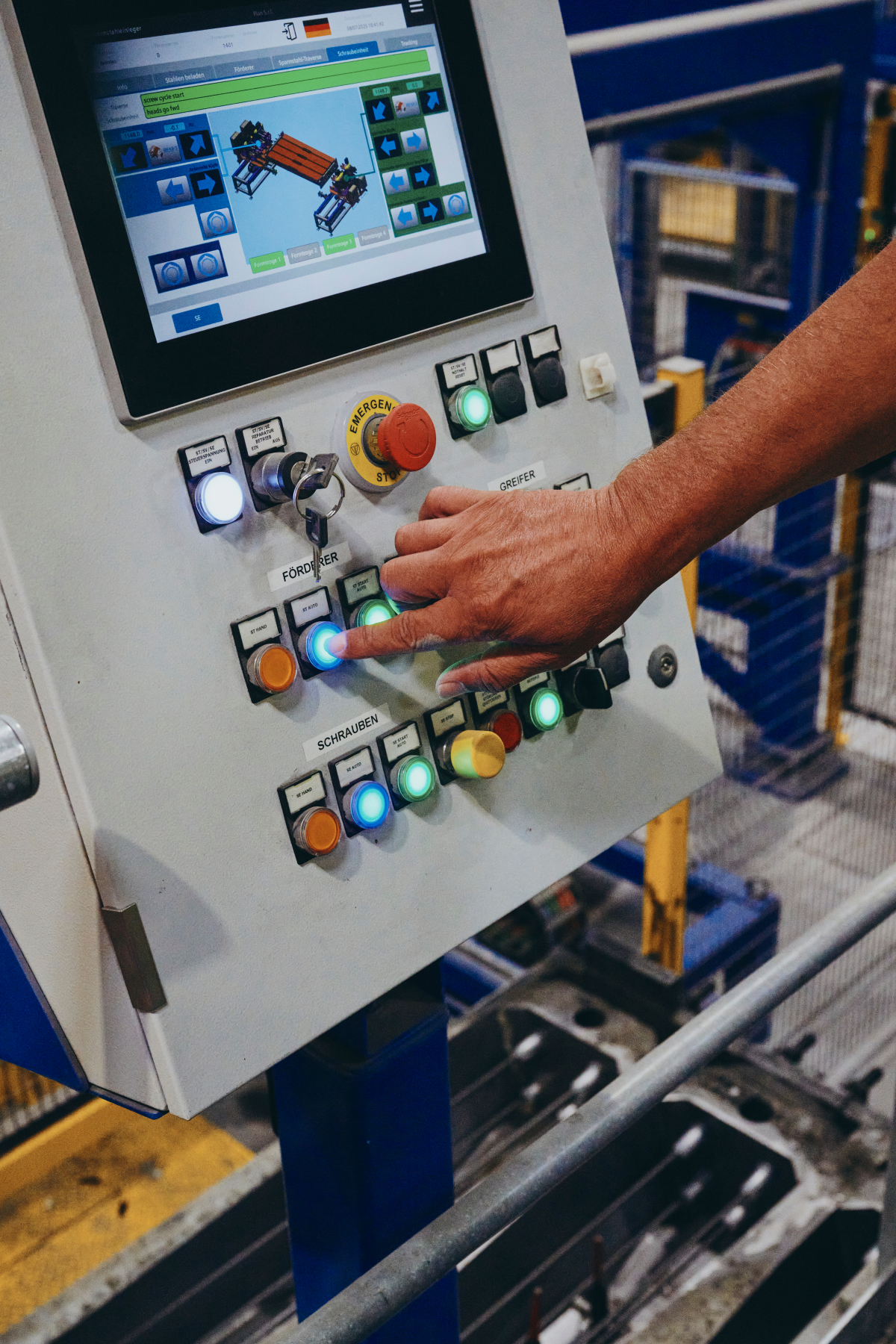
A high degree of automation relieves employees of heavy, repetitive, and ergonomically unfavorable tasks. At the same time, it shifts the requirements. In manual or semi-automated processes, many informal checkpoints arise directly within the work step. Employees clean molds, insert components, inspect surfaces, or identify deviations directly on the component. If such a step is automated, this monitoring function must be systematically ensured, for example through visual inspections, maintenance intervals, and process controls.

One example is the installation of under-sleeper pads (USPs) on prestressed concrete sleepers. In this process, an elastic sole made of high-performance plastic is firmly bonded to the concrete on the underside of the sleeper. It later lies between the sleeper and the ballast and alters the direct contact between the concrete and the ballast. Whereas such pads used to be applied or glued on manually, this process can now be integrated into the production line: The pad is automatically applied to the fresh concrete without slowing down the production cycle. This is a key factor for mass production because it allows additional product requirements to be met without sacrificing productivity or output.

As a result, automation is also changing the demands placed on employees. Physically demanding tasks are decreasing, while an understanding of processes, knowledge of equipment, and maintenance are becoming more important. In a synchronized production environment, worn-out tools, inaccurately positioned inserts, or dosing deviations can affect many components before they become visible in the final product. Preventive maintenance and close feedback between production, quality assurance, and maintenance are therefore integral to product quality.


Quality Begins Before Concrete Placement

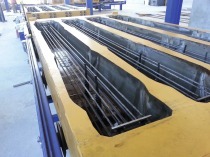
The quality of a prestressed concrete sleeper is not determined only by the finished component. In terms of materials engineering, it is significantly more demanding than its external form would suggest. It is not a simple concrete structure, but a component with precisely defined geometry: contact surfaces, fastening points, recesses, and edge radii each fulfill a specific function for track alignment, rail fastening, and load transfer. Inside lies high-quality prestressing steel. It is not only encased in concrete but is also specifically prestressed before the concrete hardens. This builds up high compressive stress within the concrete.

This prestressing is crucial because concrete can withstand compression very well but can only absorb tensile stress to a limited extent. On the track, the tie is subjected to constantly changing loads: wheel loads, vibrations, and impact loads from train operations; centrifugal forces in curves; and weather conditions ranging from rain, snow, and ice to heat and salt. The prestressing helps to absorb these dynamic stresses elastically. If fine cracks form under load, they can close again due to the compressive stress. This is precisely what distinguishes it from a simple concrete block: The tie must not only bear loads but also remain dimensionally stable, durable, and functional for decades under varying forces.

Quality assurance begins accordingly early in the process. Upon receipt of materials, cement, sand, crushed stone, prestressing steel, embedded components, and rail fastenings are inspected to ensure they meet the specified and approved quality standards. For aggregates, for example, the sieve curve is determined. To do this, samples are separated into individual grain size fractions using a standardized set of sieves and evaluated. Changes in grain size, moisture content, or composition affect concrete workability and, later, the properties of the structural elements. Especially in a production process with tight schedules, the quality of the raw materials must therefore be continuously monitored.

For prestressed concrete sleepers, the mix design is not merely a matter of compressive strength. It must take into account workability, early strength, durability, and the interaction with the prestressing process. Fluctuations in moisture content, aggregate composition, or cement quality therefore have a direct impact on process control. A robust incoming materials inspection and fresh concrete testing regimen thus serves not only as proof of quality but also as a means of production control.

Material testing is followed by tests on fresh and hardened concrete. For fresh concrete, the focus is on consistency and workability. For hardened concrete, compressive strength, flexural tensile strength, and other parameters are examined. These tests are crucial because the sleeper is subjected to constantly changing loads during service.


Temperature Control as a Process Parameter

Temperature control is an often-underestimated factor in the production of precast concrete components subjected to high loads. In sleeper production, the manufacturing process is subject to specific temperature requirements. When outdoor temperatures are high, data loggers can be inserted into the sleepers to monitor temperature trends within the concrete. Critical thresholds must not be exceeded.

This is relevant for production control because temperature deviations not only affect curing but also impact process approval and quality assurance. If critical developments become apparent, production must be able to respond. Possible measures include cooling, adjusting the production cycle, or, in extreme cases, suspending a shift. This is precisely where it becomes clear that automated mass production and knowledge of building materials technology are closely intertwined. The plant sets the production cycle, but the material follows its own laws. A stable process must bring both together: industrial timing and concrete technology control.


Dimensional Accuracy as a Process Indicator

In addition to material quality, geometry plays a central role. Track gauge requires an accuracy of 1/10 mm. For many applications in concrete construction, such precision is exceptional. In sleeper production, it is essential because the sleeper interacts directly with the rail fastening system and subsequently helps determine the position of the rail.

Dimensional accuracy is checked on a random sampling basis. In Biebesheim, at least 1.5% of daily production is measured accordingly. Measuring equipment designed specifically for the dimensions and requirements of the tie is used for this purpose. What matters is not just the individual measurement, but the systematic evaluation across the entire production run. Dimensional deviations can indicate mold wear, process changes, or problems with components.

This principle applies to precast concrete manufacturers as well: The tighter a component’s tolerances are, the more important it becomes to integrate measurement strategy, mold management, and process data. Quality assurance is then not merely a final inspection but a tool for process control.


Load Testing Up to the Point of Cracking

Ongoing quality assurance also includes what is known as the crack initiation test. In the weekly routine test, one sleeper from each type produced is subjected to a defined load. It must withstand a force of approximately 18 to 19 metric tons before a minimal crack becomes visible. This does not refer to an open fracture, but rather a fine hairline crack that can be detected with a crack magnifier. The crack is only about 15 mm long.

In type approval tests for new sleeper types, the requirements go significantly further. In these tests, the sleeper is not only loaded until a crack appears but is tested until it breaks. Forces of around 460 kN – or about 46 metric tons – are applied to the component. These loads are generated by a hydraulically operated test ram that gradually builds up the test pressure.

In addition, durability tests are conducted, such as freeze-thaw tests. For these, test specimens are sent to external testing laboratories and subjected to alternating temperatures in test cycles. A typical temperature regime ranges from +20 °C to -20 °C. These cycles condense the stresses that occur during decades of operation into a short period of time and simulate the required service life of at least 40 years. Among other things, the tests evaluate whether weathering of the concrete surface remains within acceptable limits.

The testing regimen complies with standards, customer-specific requirements, and internal factory specifications. It encompasses the entire process chain: incoming material inspection, tests on fresh and hardened concrete, process and dimensional accuracy checks, as well as durability tests during certification and mix design development. Documentation, internal quality assurance, external monitoring, and periodic audits complement this routine monitoring. Manufacturers must therefore not only produce components that comply with standards but also be able to demonstrate that the entire production and testing process is under control.


Automation, Resource Efficiency, and Process Knowledge

In the precast concrete industry, automation is often associated with productivity and securing a skilled workforce. Increasingly, another aspect is coming into play: resource efficiency. Stable processes help reduce scrap, avoid rework, and use materials more efficiently. In a high-speed production environment, even small deviations can affect large quantities. This makes it all the more important to detect errors early in the process.

For prestressed concrete sleepers, the material side also plays a special role. Concrete and prestressing steel are key components of the carbon footprint. In Germany, mix designs for certain rail applications are strictly specified. In other markets, more performance-oriented specifications can open up greater flexibility, for example, for alternative cements or customized mixes. The industry’s central challenge remains to consider CO₂ reduction, durability, certification, and process reliability as an integrated whole.

Sustainability in sleeper production can therefore only be assessed through the interplay of building material technology, certification, and industrial process management. New binders, adapted formulations, or modified curing processes must function under real production conditions and meet the required test values.

Prestressed concrete sleepers are a specialized product for a specialized application. Nevertheless, fundamental insights for the precast concrete industry can be derived from their production: Automation is effective only when combined with a clear testing protocol. Material consistency is central to just-in-time production. Tight tolerances require systematic management of molds, measurement, and maintenance.

This is relevant for precast plants that are modernizing their production. The economic benefits of automated lines do not stem solely from higher cycle rates. They result from repeatability, fewer disruptions, lower scrap rates, better predictability, and improved workplace safety. However, these effects only materialize when production data, testing processes, and technical expertise are integrated.

The Biebesheim facility demonstrates how this can be implemented in specialized series production. The production process combines high capacity with automated process steps and a multi-stage inspection regimen. The progress lies not in a spectacularly new component, but in the ability to reliably produce an established precast concrete element in large quantities, with high precision, and under strict requirements.


Conclusion

The manufacture of prestressed concrete sleepers illustrates the demands placed on modern precast concrete production when high production volumes, tight tolerances, safety-critical component functions, and comprehensive testing requirements converge. The key lies in the interplay of material testing, stable process control, dimensional inspection, load testing, documentation, and qualified personnel. Automation can be an important lever in this process, but it cannot replace expertise in building materials technology or quality assurance.

Thus, sleeper production becomes an example of industrial excellence in the truest sense: not as a buzzword, but as the masterful mass production of a precast concrete component subjected to high loads.

CONTACT

Moll Rail

Lindwurmstraße 129a

80337 München/Germany

+49 89 74 11 48-50

www.moll-rail.com


x

Related articles:

Issue 07/2014 Vollert Anlagenbau

Prestressed concrete sleepers for America

High-speed rail lines traveling at more than 200 km/h and higher axle loads subject the roadbeds of railroad lines to enormous forces. Prestressed concrete sleepers for track systems therefore...

more
Issue 06/2015

Prestressed concrete sleepers for Thailand’s major railroad construction projects

Thailand has seen a rapid economic boom since the 1970 s. This happened in a much shorter period than in Taiwan or South Korea, for example. In spite of the current political instability and a growth...

more
Issue 09/2020 RAIL.ONE

Industry 4.0 in the production of prestressed concrete turnout sleepers

Prestressed concrete turnout sleepers are characterized by a great variety of versions. After ordering, clients purchasing these products expect ever shorter lead times, with ever more increasing the...

more
Issue 01/2018 Weckenmann Anlagentechnik

Modern plant equipment for production of prestressed concrete railway sleepers

Since their introduction in 1970, the type B70 sleeper is the mostly used prestressed concrete sleeper in the rail network of Deutsche Bahn. The sleeper can be used flexibly, has a load-bearing...

more
Issue 03/2016 WCH/Zonis

Up to 1,000 prestressed concrete ­railway sleepers per day from Buenos Aires

The Argentinian building contractor Luis Carlos Zonis S.A. has already made a name for itself with public and private clients from sectors such as railway and underground construction,...

more