

First production facility for climate-friendly concrete additive in Bernau
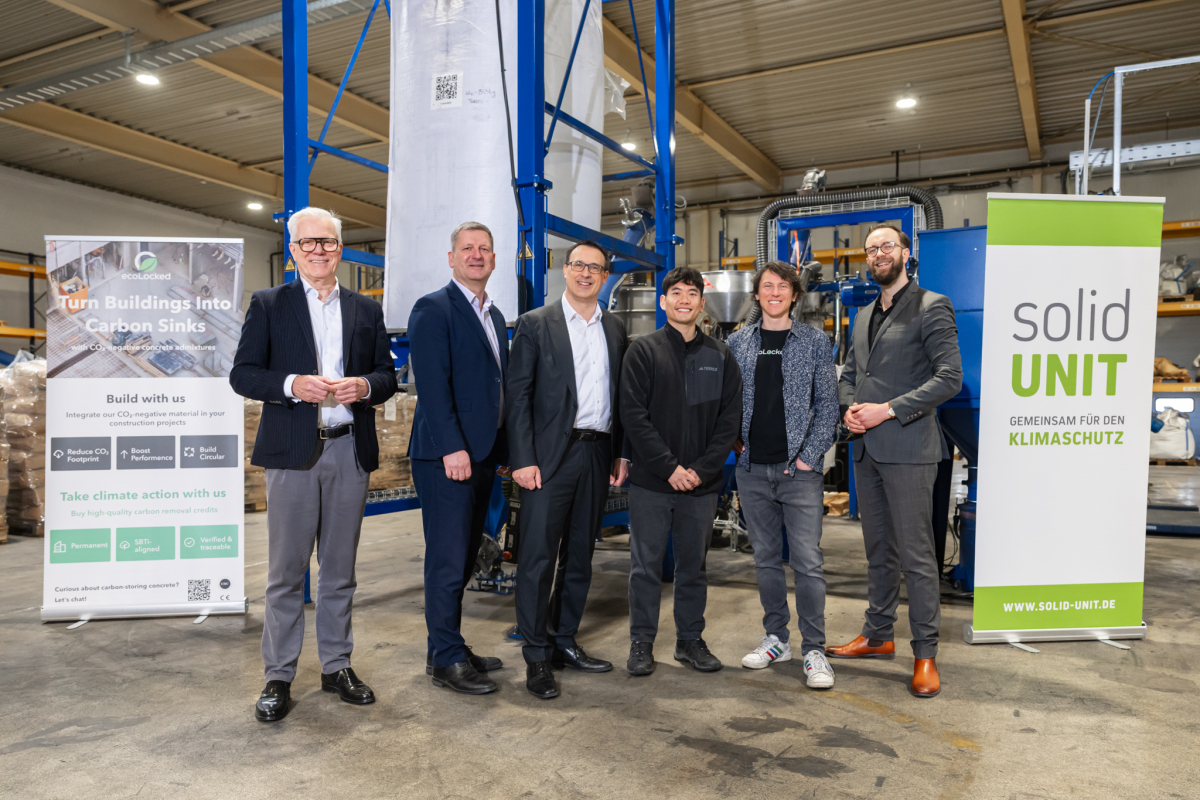
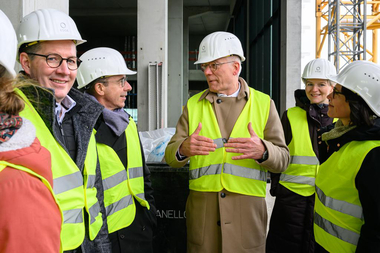
How can the construction industry not only reduce CO₂ emissions but also actively help remove carbon from the atmosphere? A facility in Bernau near Berlin has recently begun operations that is turning what was once considered a vision of the future into reality: It produces a high-quality concrete additive that permanently binds CO₂ within the building material – thereby potentially turning every concrete structure into a carbon sink. Sören Bartol, Parliamentary State Secretary to the Federal Minister for Housing, Urban Development, and Construction, visited the site during a spotlight event organized by the Solid Unit innovation network to see how the climate-tech startup EcoLocked is translating this idea into an industrial and scalable reality.
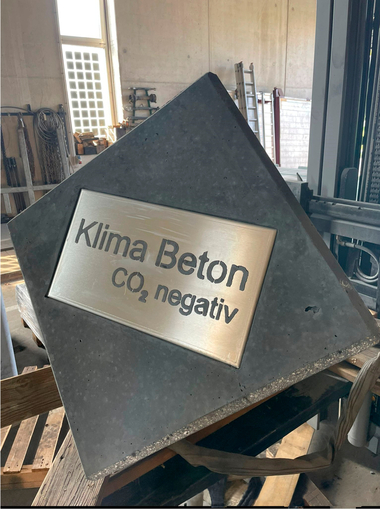
The production line is the first of its kind in the German-speaking world. Its product: a biochar-based aggregate that can be integrated directly into concrete after processing and manufacturing. For the industry, this means climate protection not only through avoidance and reduction, but through active CO₂ removal. “We have ambitious climate goals in Germany. The construction industry plays a key role in this, and we need solutions that demonstrate how climate-friendly construction works in practice. The hub in Bernau demonstrates a technological approach to this: through the biochar-based aggregate, mineral building materials become carbon sinks. Until now, this was primarily reserved for bio-based materials such as wood. Together with renewable raw materials, this process can support the transformation of the building sector from a source of emissions to a carbon sink,” said Parliamentary State Secretary Sören Bartol.
From Waste to Climate-Friendly Building Material
EcoLocked technology follows a simple yet effective principle: biomass residues are converted via pyrolysis into stable carbon that can be stored for centuries. EcoLocked processes this carbon into an industrially usable concrete additive. Roads, buildings, and infrastructure thus become long-term carbon sinks.
Biochar Carbon Removal (BCR) is already one of the world’s most important certified methods for CO₂ removal. EcoLocked is bringing this technology directly into construction practice for the first time, thereby creating a lever for climate-effective scaling.
With the new hub, EcoLocked is not only launching mass production. The company plans a global network of sites designed to gradually transform the construction sector into a worldwide carbon sink.
“With the EcoLocked Hub, we have created a technological platform that makes the use of biochar and the sequestration of stable carbon feasible on a global industrial scale. Our goal is to empower partners worldwide to take action themselves. We see enormous potential here to permanently remove significant amounts of CO₂ from the atmosphere and sequester it directly in the built environment,” explains Micheil Gordon, CTO and co-founder of EcoLocked.
EcoLocked was founded in 2021 by Mario Schmitt, Micheil Gordon, and Stefanie Gerhart. Today, a team of 18 people from 13 countries continues to develop CO₂-negative building materials. The company is headquartered in Berlin, with its laboratory and production facilities located in Bernau.
Solid Unit as a Bridge to Practical Application
The innovation network Solid Unit has supported EcoLocked since the early development phases and, with this Spotlight, once again demonstrates how climate-friendly building material innovations make the leap from the lab to the construction site.
“We see this not just as a new product, but as a new understanding of the role of construction in the future,” said Christian Bruch, Deputy CEO of Solid Unit. “Activating solid mineral building materials as CO₂sinks even during the building’s operational phase – that is exactly the shift in perspective we need.”