

Concrete Damage in Precast Reinforced
Concrete Elements
Precast concrete elements enable cost-effective and precise construction, but place high demands on materials, planning and execution. Damage such as cracks, spalling or corrosion can compromise the durability of the structure. This article examines typical causes of damage, modern concrete mixes, requirements for exposed concrete, as well as quality assurance procedures and concrete repair methods.
Causes and Manifestations
Concrete damage can result from several factors, including design, construction, and material defects, as well as chemical and physical influences. Common types of damage to concrete components include cracks, spalling, and corrosion of the reinforcement. Possible causes include, for example, an incorrect concrete mix design, inadequate compaction of the fresh concrete, or insufficient concrete cover, which leaves the reinforcing steel unprotected. Weather conditions such as freeze-thaw cycles, road salt, and aggressive pollutants in the air, as well as inadequate curing of the concrete, can also lead to concrete damage. Damage to precast concrete elements can also result from improper transport. Visible signs of concrete damage include cracks, spalling, efflorescence, dusting, voids (hollows), or discoloration.
Mechanical and chemical stresses
Concrete damage can, under certain circumstances, compromise the stability and durability of structural components. Damage to precast concrete elements can also result from excessive mechanical stress during transport or installation, as well as from chemical processes such as carbonation and corrosion, or from manufacturing defects.
Formwork and surface quality
To achieve smooth exposed concrete surfaces, steel formwork as shown in Fig. 8, or so-called concrete shuttering panels, should be used.
The German Concrete and Construction Technology Association (Deutsche Beton- und Bautechnik-Verein e.V. (DBV)) and the Association of German Cement Works (Verein Deutscher Zementwerke e.V.) regularly publish technical bulletins on the requirements for exposed concrete. These classify concrete into four different exposed concrete classes, which can be assigned to two basic categories:
1. Exposed concrete with low requirements:
Exposed concrete class 1 (SB1)
2. Exposed concrete with normal or high requirements:
Exposed concrete class 2 (SB2),
Exposed concrete class 3 (SB3) and
Exposed concrete class 4 (SB4)
Release agents for smooth concrete surfaces prevent the concrete from adhering to the formwork by forming a fine film, which allows for clean demolding and a low-porosity, stain-free exposed concrete surface. A test should be conducted beforehand to prevent staining or discoloration of the concrete. Modern, environmentally friendly release agents are vegetable oil-based.
The requirements document or technical guideline issued by the DBV and the VDZ specifies not only the evaluation criteria but also the design and construction conditions corresponding to each classification. Compliance with the specific requirements for exposed concrete is mandatory for every project for which the application of the DBV/VDZ technical guideline has been contractually agreed upon.
Precast Concrete Elements: Production and Modern Formulations
The manufacture of concrete components in a precast plant has the advantage that production can take place under controlled conditions and with consistent quality. For production efficiency, it is crucial that the concrete develops high early compressive strength, which enables rapid formwork removal. Therefore, precast plants prefer to use “highly reactive cements” with a high clinker content, treat the component with heat, and/or employ high-performance chemical accelerators.
Climate-friendly concrete mixes that use less cement incorporate cement substitutes such as fly ash or granulated blast furnace slag, alternative binders, or recycled aggregates, and optimize the mix through finer grinding and adjusted water-to-binder ratios to reduce the carbon footprint. They are particularly environmentally friendly because they reduce or replace energy-intensive cement clinker without compromising quality when dosed appropriately. To permanently sequester carbon dioxide in concrete, CO₂-sequestering aggregates can be used. CO₂-sequestering aggregates are materials that utilize the natural process of carbonation, often through the use of CO₂-rich exhaust gas or by introducing
CO₂ into recycled aggregate, which turns the concrete into a “carbon sink” and reduces the material’s carbon footprint by converting the CO₂-into stable limestone structures. CO₂-binding aggregates in concrete are processed mineral materials — mostly recycled demolition concrete or fine cement residues — that permanently store CO₂ through the addition of carbon dioxide in a technical process. In this process, the CO₂ reacts with the cement residues to form limestone, which makes the concrete more sustainable.
“New concrete” for precast reinforced concrete elements focuses on “sustainability” (less cement, recycled materials, cement-free alternatives), “faster production” (additives for curing), and “improved properties” (use of steel fibers for slimmer components) and is regulated by new standards (DIN 1045), which enable slimmer, more efficient, and more environmentally friendly construction methods. The new DIN 1045 series of standards, “Structural Systems of Concrete, Reinforced Concrete, and Prestressed Concrete” (to be introduced in August 2023), establishes an important, independent classification system for precast concrete components along the value chain: the “BBQ Concept” (“Concrete Construction Quality”). The new DIN 1045 series comprises a total ofseven parts covering the entire concrete construction process—from fundamentals through design, sizing, and concrete to construction execution, plus a section on precast concrete elements, with Part 1000 of the standard newly introduced as a central element to regulate the “Concrete Construction Quality Classes” (BBQ).
New regulations on material testing, which ensure better coordination between planning, manufacturing (precast plant), and the construction site, are also addressed in the standard to guarantee the fit and quality of the precast elements. There are new minimum requirements for the air content of fresh concrete (DIN 1045-2); if these are not met, an extended initial test is required to ensure workability and bond. Furthermore, the standard promotes the use of concrete with recycled aggregates and new cements to achieve sustainability goals without compromising concrete quality.
Testing and Quality Assurance
Ultrasonic concrete testing can be used to non-destructively detect gravel pockets, voids, foreign material inclusions, delamination, leaks, and cracks in concrete when there is access to the concrete component from one or both sides. Ultrasonic testing of concrete works by sending short sound pulses into the material and analyzing the reflected echoes to detect the “internal defects” listed above and to determine the component thickness . A transmitter and a receiver (often in the same probe) measure the travel time of the waves. Deviations in travel time and intensity indicate material inhomogeneities, similar to radar. The method has been established for several decades, with significant developments and refinements in the 1990s.
Exposed Concrete Finishing and Renovation
If the contractually agreed requirements could not be met, the defects must be rectified. “Exposed concrete restoration” methods allow for the rectification of defects, which—regardless of the required exposed concrete class—leads to an improvement in the “visual appearance” of a flawed exposed concrete surface. „Exposed concrete restoration“ involves thorough cleaning and repair of defects (using special fillers/mortars) followed by surface treatment (grinding, polishing, glazing, sealing) to conceal defects such as cracks, pores, or discoloration and achieve a homogeneous, aesthetically pleasing surface, often using special resin-mineral mixtures or pigmented glazes.
Concrete cracks approximately 10 mm wide and 10 mm deep or more can be repaired using extremely durable epoxy resin mortars or special resins. So-called crack fillers, crack resins, or repair mortars are also suitable for the restoration of concrete components. If cracks are only minor defects, they are often repaired solely for aesthetic reasons. Cracks that jeopardize the stability and structural integrity of a building are typically found in load-bearing components. Such cracks must be repaired to ensure the load-bearing capacity of the damaged components remains intact. Sealing damp or water-bearing cracks using injection methods can prevent further water penetration into concrete components.
For extensive damage, concrete repair methods using special mortars can be employed, and to protect the concrete surface in the long term, surface coatings can be applied that shield against weathering and chemical influences. For “minor” concrete damage, manual repairs can be performed. In this process, damaged areas are cleaned and filled with repair mortar using a trowel or putty knife. The mortar must be smoothed out to achieve a level surface. In the “epoxy resin method” for sealing cracks, the cracks are first cut open to achieve a width and depth of at least 0.5 cm. Dust must be thoroughly vacuumed up. Wave connectors may be inserted into cross-slots to stabilize the crack. Next, well-mixed epoxy resin is poured into the crack and smoothed out. Finally, quartz sand is applied to improve adhesion for further coatings before the excess sand is removed.
In cases of “major” concrete damage, the damaged layer must first be removed to a certain depth. The concrete surface is then pretreated with a bonding primer. The area is subsequently filled with a high-performance mortar, such as a sprayed mortar or a reactive resin mortar.
For sagging floors, the sagging concrete is first raised by injecting a special polymer foam underneath it. As protective measures following a repair, concrete protective coatings can be applied to the concrete surface to protect the concrete from wear or carbonation and to prevent the steel reinforcement from rusting. Such coatings are typically vapor-permeable to maintain the surface’s breathability.
When sandblasting concrete, the top layer is removed using an abrasive (such as quartz sand or glass beads) to create a rough, open-pored surface. This process is suitable for cleaning concrete surfaces, removing coatings, creating aesthetic effects on exposed concrete, or improving slip resistance. A distinction can be made between “dry” and “wet” blasting, with “wet” blasting producing less dust but requiring the disposal of wastewater.
Voids and Surface Defects in Exposed Concrete
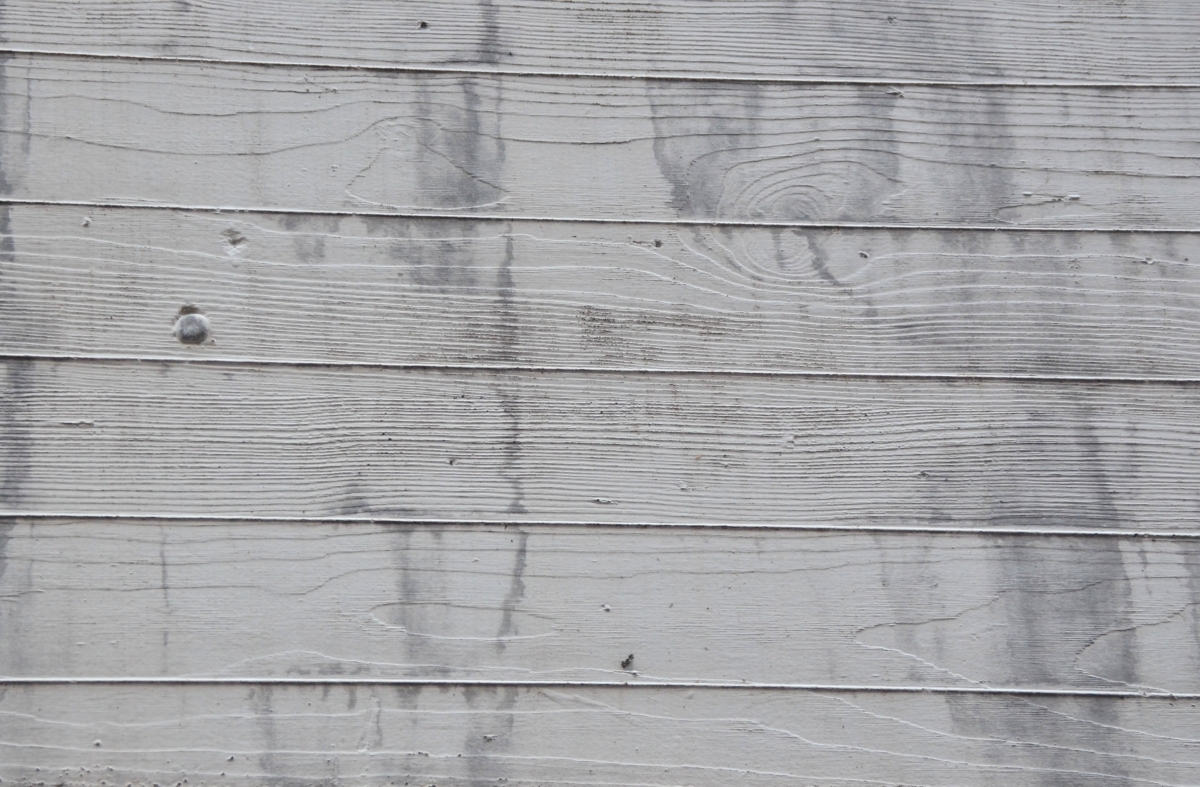
The concrete wall shown in Fig. 9 was constructed using formwork boards and exhibits small voids as well as spalling on the concrete surface. Voids are small holes in the concrete that result from poor compaction during pouring or when aggregate particles are insufficiently coated with cement because the concrete was poorly mixed. Water separation can also lead to the formation of voids. They are also commonly referred to as “pores.” Voids are considered defects that should be avoided as much as possible and significantly reduce the quality of exposed concrete.
Durability and Protection of Reinforcement in Reinforced Concrete Construction
During the demolition of a road bridge (Fig. 10) from the 1950s, it became apparent that a new structure is required due to corrosion damage to the reinforcement. The planned replacement bridge could, for example, be constructed using precast prestressed concrete elements. Such damage patterns underscore the critical importance of effective corrosion protection for the reinforcement in reinforced concrete construction.
Normative requirements for concrete cover
To ensure the durability of reinforced concrete, DIN EN 1992-1-1, Edition 2011-01, “Eurocode 2”: Design and construction of reinforced and prestressed concrete structures - Part 1-1: General design rules and rules for building construction and DIN EN 1992-1-1/NA, Edition 2013-04, National Annex - Nationally determined parameters General design rules and rules for building construction specifies requirements for the concrete cover of the reinforcement. “Concrete cover” is the minimum distance between the surface of the reinforcement and the nearest concrete surface.
Minimum values and influence of environmental conditions
The concrete cover of the reinforcement must be at least 10 to 15 mm, depending on the environmental conditions and the specific structural element. Additionally, a safety margin of 10 mm is taken into account, so that in practice a so-called “nominal dimension” of between approximately 20 mm and 50 mm is often obtained.
In the presence of aggressive environmental influences, such as high humidity or chloride exposure from road salt, increased concrete cover is required to effectively protect the reinforcement from corrosion. The specific requirements can be found in the relevant standards.