

Concrete technology

Measures to reduce CO2 emissions
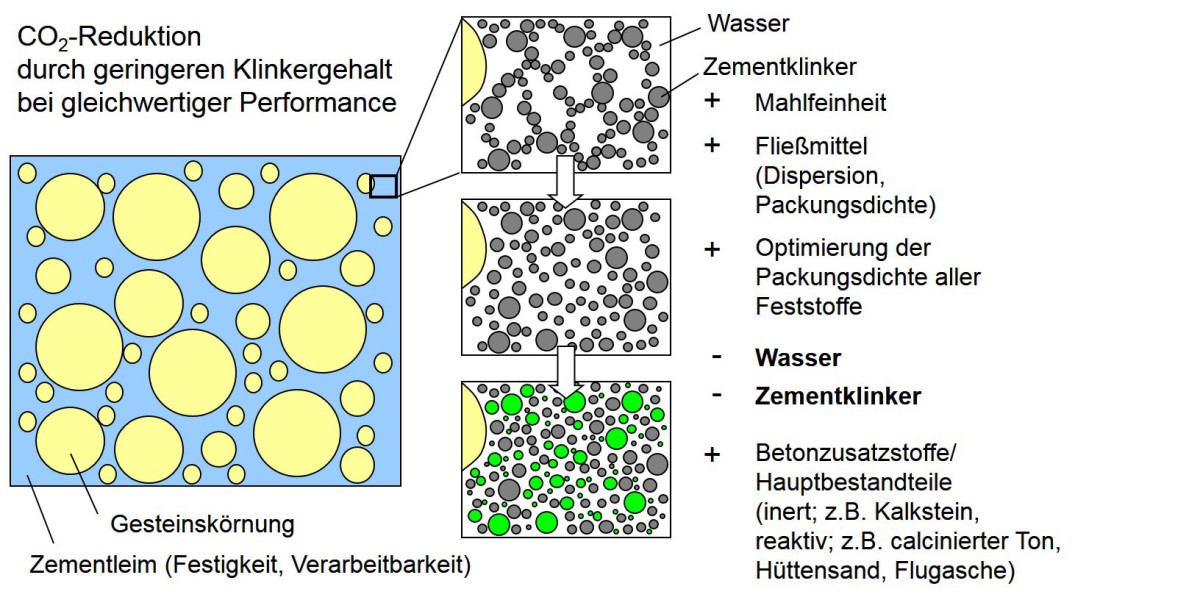
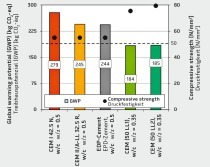
More than 6 % of the worldwide carbon dioxide (CO2) emissions caused by humans are associated with the production of cement and concrete. It is a known fact that a purposeful substitution of the burnt cement clinker contained in cement and concrete, respectively, by alternative materials can lead to a significant reduction of the global warming potential. Due to the economic, technological and ecological benefits, in particular, blast-furnace slag and hard-coal fly ash are used as a cement constituent and/or concrete admixture in Germany at present. However, these materials are available to a...

Related articles:

Issue 06/2022

Rheological behavior and CO2 footprint of cements binder exhibiting ultra-low clinker content

In order to reduce the CO2 footprint of cement it is necessary to decrease the clinker content significantly, i.e. well below 50?%. To probe into such systems, the use of alternative raw materials...

more
Issue 02/2015 Production, curing, environmental impact

State-of-the-art concretes containing cements with a reduced clinker ratio

Concrete is the most widespread construction material of our times – about 12 billion m3 of concrete are produced worldwide each year. The manufacture of cement, as one of the raw materials of...

more
Issue 02/2018 Limestone-based green cements

Predicting concrete shrink-behavior

The cement industry generates about 6% of global CO2 emissions that are primarily caused by the production of Portland cement clinker. A reduction in the clinker content of cement and concrete and its...

more
Issue 10/2021

Admixtures enable massive CO2 reduction in concrete

The German federal government‘s decision to achieve climate neutrality in Germany by 2045 has further increased the pressure, also in the construction industry, to take comprehensive measures to...

more