

Follow-up Report: 22nd KIT Symposium on Building Materials and Building Preservation
30.03.2026
 Figure: KIT/IZB
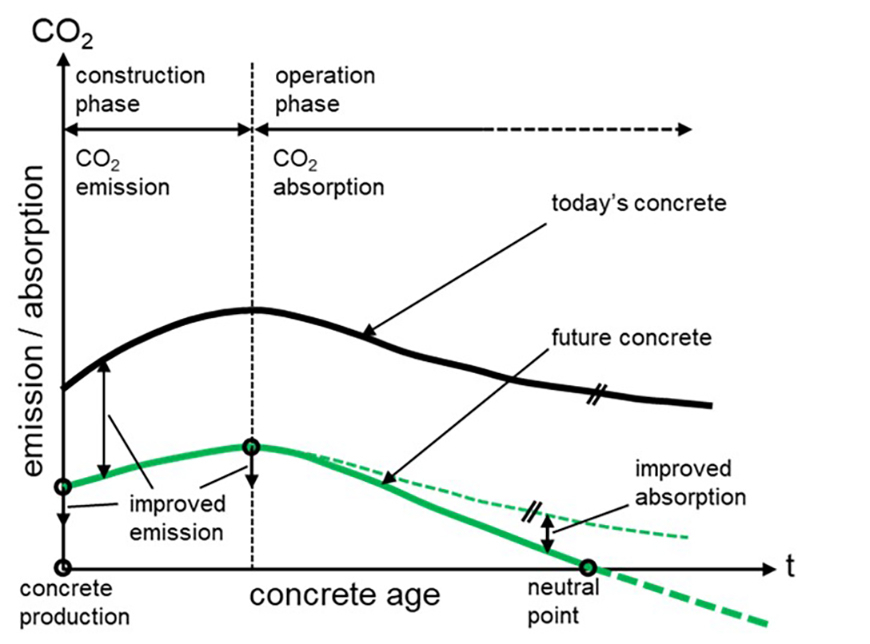
The cement and concrete industry is a major contributor to global CO2 emissions. Previous symposia have featured extensive discussions on how to effectively counteract these emissions. The variety of approaches and perspectives highlighted just how diverse the technological innovations and conceptual ideas in this field are.
Figure: KIT/IZB
The cement and concrete industry is a major contributor to global CO2 emissions. Previous symposia have featured extensive discussions on how to effectively counteract these emissions. The variety of approaches and perspectives highlighted just how diverse the technological innovations and conceptual ideas in this field are.
At the 22nd KIT Symposium “Building Materials and Structural Maintenance,” held on March 17, 2026, in Karlsruhe, the discussion took a step further. Under the title “Building with Concrete for Tomorrow – Implementing Innovations in Practice,” speakers from research, industry, and the public sector focused on the concrete application and implementation of these approaches. Nearly 100 participants engaged intensively with these topics.
Climate-Efficient Construction with Concrete
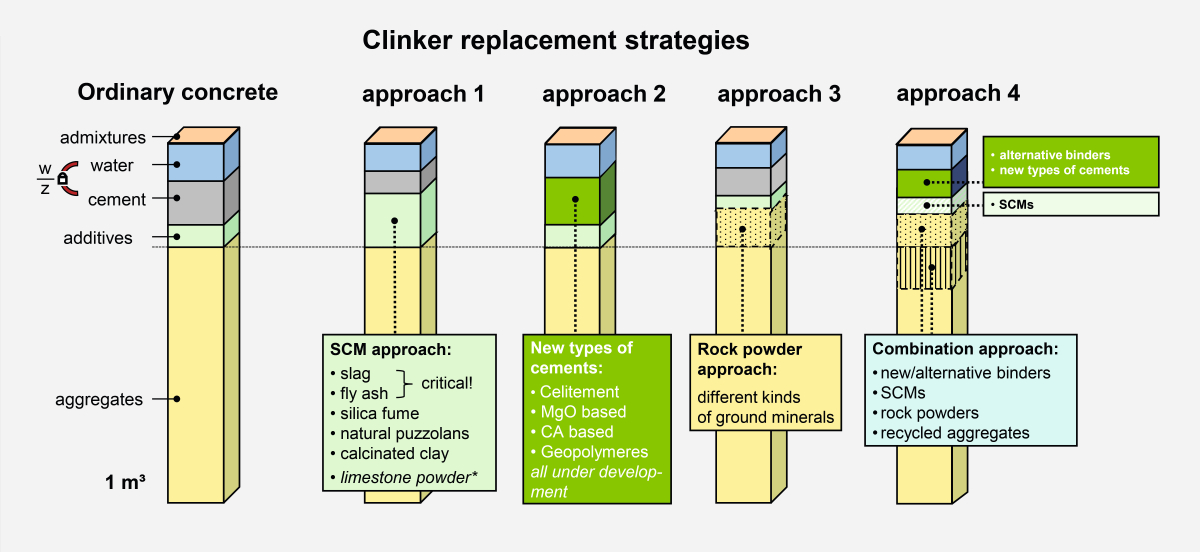
A particular focus was placed on the question of to what extent existing and new regulations support or restrict climate-efficient construction with concrete. This was examined using the new Eurocode 2 and the DAfStb’s ERC guideline with regard to durability assessment and exposure classes, in order to better assess their relevance for practical application. Furthermore, concrete construction for high-load areas was compared with other commonly used building materials based on a concrete life cycle assessment. Additionally, the discussion addressed the implementation of innovative construction methods, exemplified by the U5 project of the Hamburg Hochbahn. The use of clinker-reduced cements also took center stage—ranging from technical requirements and industry acceptance to the communication of these new products. An international look at Switzerland was intended to show which solutions are already being successfully implemented there and what implications this might have for the local market. Additionally, issues regarding the compatibility of concrete admixtures with low-clinker cements were addressed. Last but not least, concrete examples were used to explore how standards and building code approvals promote or shape innovations in concrete construction technology and their implementation in practice.
The “Building Materials and Structural Maintenance” symposium takes place annually as a collaboration between the Concrete Information Center (IZB), the Association of German Concrete Engineers (VDB), and the Karlsruhe Institute of Technology (KIT), and was once again held this year under the patronage of the Baden-Württemberg Ministry of the Environment, Climate, and Energy.
The event was aimed at engineers, architects, and specialized firms, as well as building owners, public authorities, and building operators, and anyone interested in current issues related to concrete construction. Be sure to join us again at the next event in spring 2027!
The written contributions from this year’s event can be accessed via the following link: Proceedings of the 22nd Symposium on Building Materials and Building Maintenance.
CONTACT:
InformationsZentrum Beton GmbH (IZB)
Toulouser Allee 71
40476 Düsseldorf/Germany
+49 211 280481