


Ultra-thin colored façade elements made of UHPC
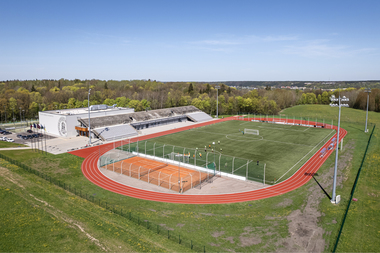
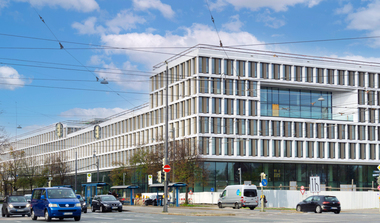
In 2020, we received an inquiry to participate in the Sports Center façade project of Vytautas Magnus University. The Sports Center is named after Valdas Adamkus, the former Lithuanian president and honorary doctor of the university who was very much in favor of sports himself.
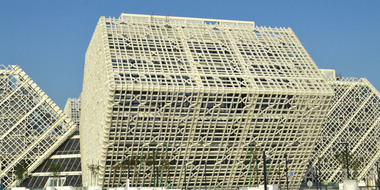
Glass-fiber-reinforced concrete panels were planned to be installed on the façade, but we were able to compete with a cost-effective yet more sophisticated and durable solution: fiber-reinforced UHPC panels
in various dimensions – up to 1,400 mm wide, 3,100 mm high, and 20 mm thick. The base for the UHPC was Dyckerhoff Nanodur Compound 5941 white.
The architects designed two types of panels: 770 m² of light grey panels for the main façade area and about 60 m² of entrance area in a warm, contrasting shade that adds definition and dimension to the building.
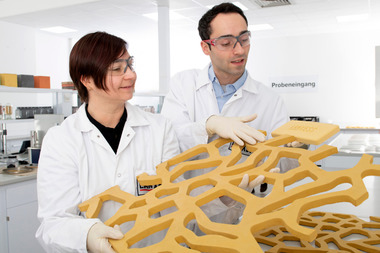
The panels were cast adding brown, red, and yellow pigments to create a color close to natural rusted steel. To increase contrast and unique look, we chose to use an old concrete staining technique, which is the post-treatment of cured concrete with a light solution
of muriatic acid and water mixed with iron salts. The effect is a natural looking color pattern with different shades of brown. The stain starts a chemical reaction by penetrating the concrete surface
and reacting chemically with the calcium hydroxide inside the concrete, forming iron oxides which later become a permanent part of the concrete surface. Low pressure sprayers were used to coat the surface and this procedure was repeated several times to achieve a more intense color. The pattern is chaotic and no two stained concrete panels look the same. To increase the randomness of color variations, we sprinkled each panel with a mix of sand and dry iron salts, mostly iron sulfate. Residues were removed using high-pressure water cleaning, followed by rinsing and neutralization with light ammonia solution. After that, two coats of sealer were applied to increase durability.
This project perfectly matched Hibeton’s main concept of “ascetic luxury” to create value by practical, durable and unique engineering and design solutions.
Since very light and thin panel sections were possible with UHPC, the carbon footprint of the UHPC façades was significantly lower than that of façades made of normal concrete. In this project, about 11 kg of CO2 per square meter were emitted during the production of the binder. Due to their low weight, panels were installed manually, which also made it possible to reduce CO2 emissions for transport and crane services.