

Concrete from ash

When municipal waste incineration ash encounters CO2, a new raw material for the construction industry could be created. An interdisciplinary consortium involving TH Cologne is therefore investigating a new process for permanently binding carbon dioxide. The end product is to be used as a substitute building material in road construction or concrete production.
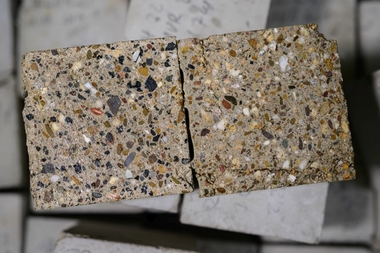
Every year, around six million tons of bottom ash from the incineration of municipal waste are produced in Germany. This ash is treated in specialized processing plants to recover metals and, through targeted screening and sorting steps, processed into purified finished ash. „The mineral components contained in this ash are capable of absorbing CO2 and bind it permanently – a process known as carbonation. In our project, we want to develop a practical carbonation process and test whether our end product is suitable for use in road construction or concrete production,“ explains Prof. Dr. Björn Siebert from the Institute for Building Materials, Geotechnics, Traffic and Water at TH Köln.
Various approaches in the pilot plant
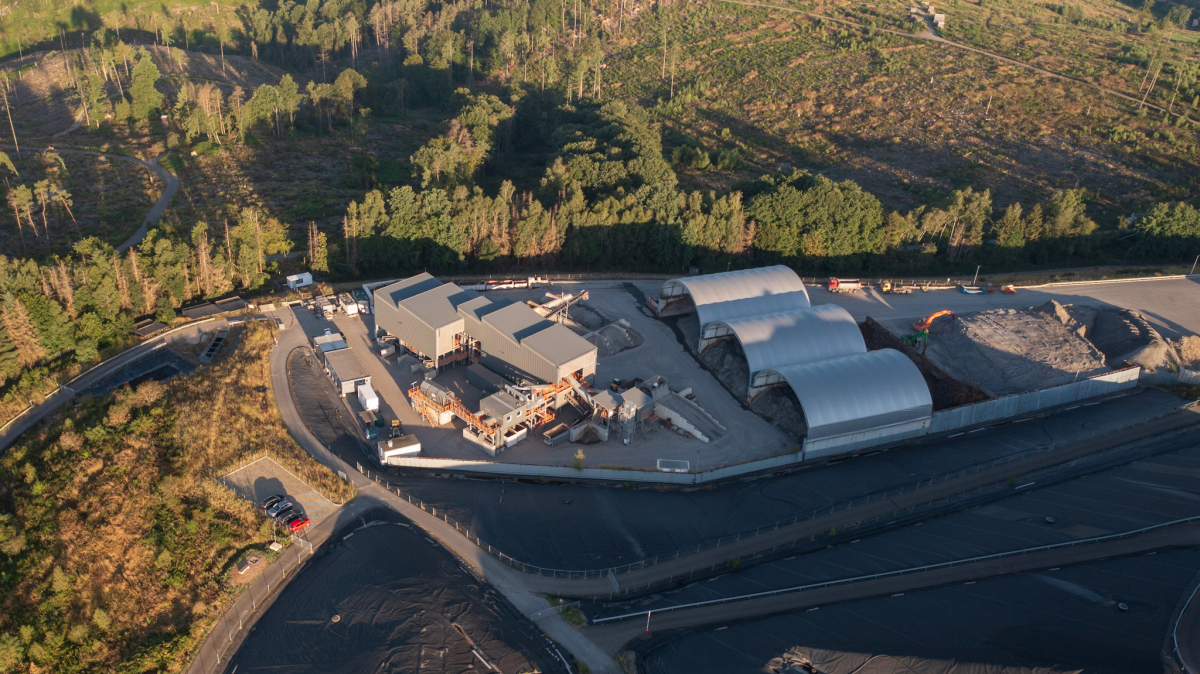
To this end, a technical test facility is to be set up by the two scientific project partners, TH Köln and RWTH Aachen University, at the Leppe waste disposal center. This is operated by the consortium leader, the Bergisch Waste Management Association (BAV), near Lindlar. As an industrial partner, Refer GmbH is providing the raw material, processed municipal waste incineration ash from its grate ash processing plant.
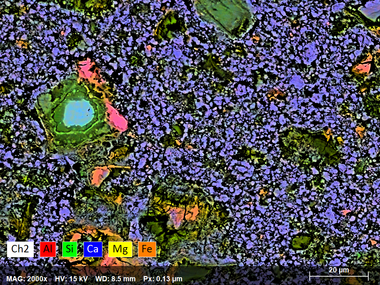
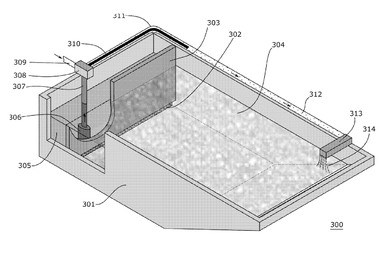
The central technical question is which method can be used to bind the CO2 most efficiently in the ash. „We are pursuing two approaches, each of which has specific advantages and disadvantages: Wet carbonation under water allows more carbon dioxide to be absorbed, but requires energy for subsequent drying. In wet carbonation with little moisture, a relatively dense, carbonated layer forms on the surface of the ash, so that less CO2is stored because it cannot penetrate the interior,“ says Prof. Dr. Axel Wellendorf from the Institute of General Mechanical Engineering at TH Köln.
Use in road construction or concrete production
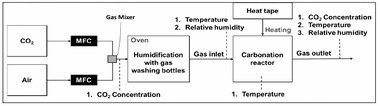
First, the partners are testing different carbonation processes and setting up a flexible, practical test facility for this purpose.
At the same time, the researchers are investigating the potential for CO2-intensive concrete production. Here, the ash could act as a binding agent. A prerequisite for this application is a defined, consistent material quality. For this reason, the project also includes experiments on further processing or single-type crushing. „If we succeed in providing carbonated ash that meets the relevant standards and environmental requirements, this would be an important step for the circular economy and climate protection,“ emphasizes Wellendorf.
About the project
The KARMA (carbonation of waste incineration ash) project won the „CCU Model Regions NRW“ funding competition organized by the Ministry of Economic Affairs, Industry, Climate Protection, and Energy and will receive a good million euros until mid-2028. CCU stands for carbon capture and utilization, i.e., the separation and use of CO₂.
CONTACT
TH Köln
Referat Kommunikation und Marketing
Presse- und Öffentlichkeitsarbeit
Claudiusstr. 1
50678 Cologne/Germany
+49 221 8275-3731