

Schöck

Thermal anchor: lower U-value ­dispenses with detailed thermal bridge calculation
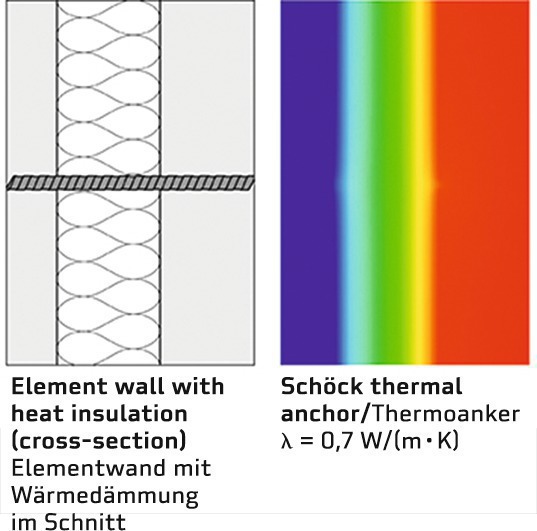
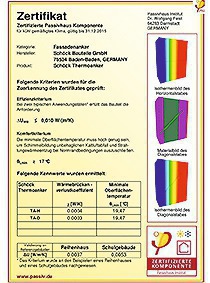
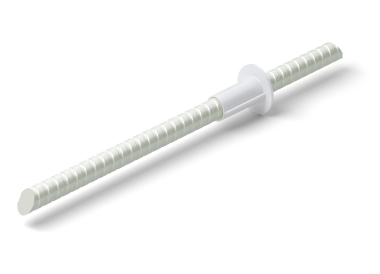
Current calculations show that the Schöck thermal anchor allows design engineers to dispense with complex and detailed thermal bridge calculations as its thermal conductivity is very low at a lambda value of 0.7 W/mK.

The EN ISO 6946 standard governs the method of calculating the thermal resistance (R-value) and thermal transmittance (U-value) of structural components. It specifies for a correction of the U-value to be made in case of point penetrations, which requires an additional calculation to be made by the design engineer. This correction can be dropped, however, if ∆Uf (number of...

Related articles:

Issue 07/2015 Schöck Bauteile

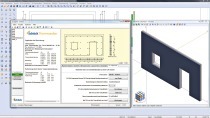
New calculation program for thermal anchors

Energy efficiency also plays a key role in building with precast concrete products. For the design of core-insulated precast double walls and sandwich walls with Schöck thermal anchors, this...

more
Issue 09/2012

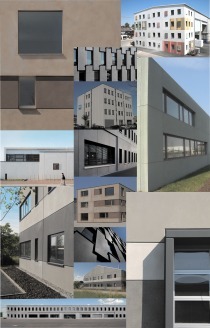
Structural and energy-related design of reinforced concrete sandwich facades

Today, designers need to meet a large number of carefully coordinated requirements when designing state-of-the-art buildings. During the last couple of years, the focus has been not only on design...

more
Issue 09/2015

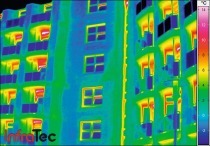
Thermal bridges: minimizing weak spots with an adverse effect on energy performance

Thermal bridges are problematic for several reasons: they adversely affect the energy consumption of buildings, hygienic conditions and living comfort. Thermal bridges may cause up to 50?% of heat...

more
Issue 06/2018 SCHÖCK

Thermal anchor with depth limiter for exposed concrete façades

The new TA-HC thermal anchor for element and sandwich wall façades offered by building materials manufacturer Schöck is fitted with a new depth limiter which prevents the thermal anchor from being...

more