

FBS supports the objectives of the “Water Management Industry Vision 2025”
16.01.2026
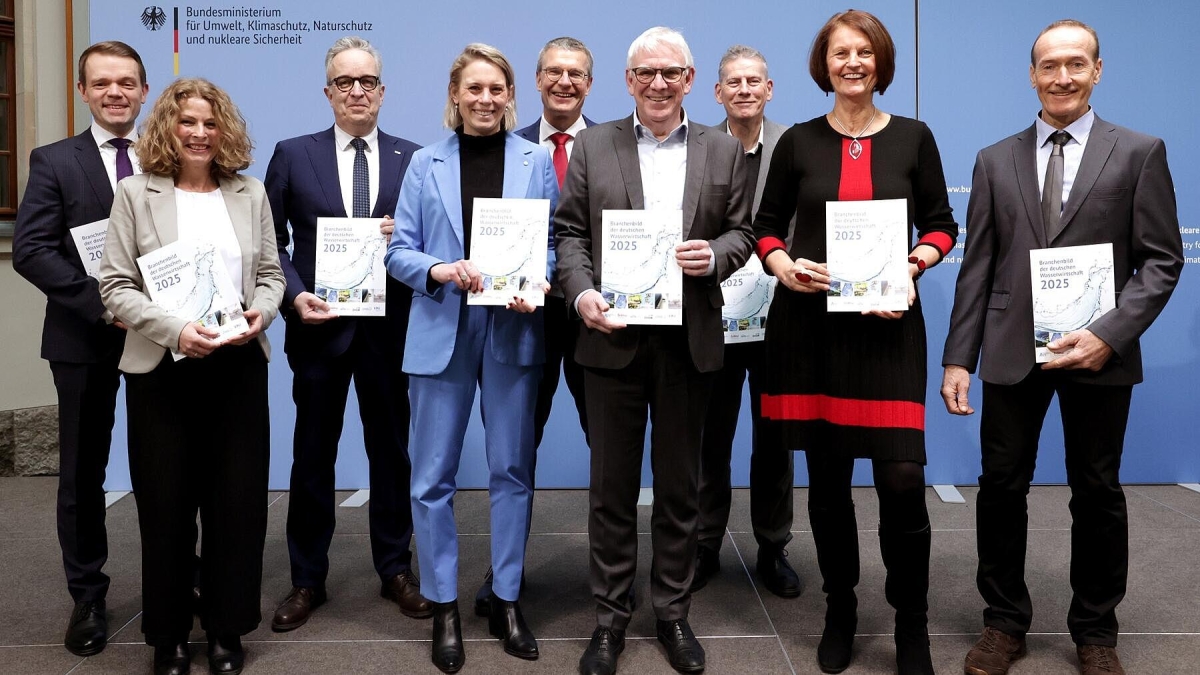 With their “Industry Outlook for the German Water Management Sector 2025,” ATT, BDEW, DBVW, DVGW, DWA, and VKU, in coordination with the German Association of Cities and the German Association of Towns and Municipalities, provide an up-to-date overview of water supply and wastewater disposal in Germany
Figure: BDEW / Jens Schicke
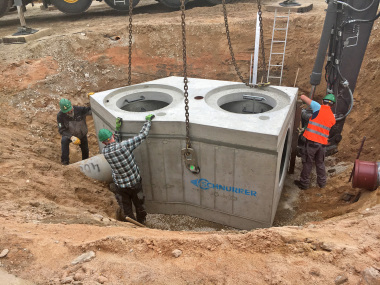
The Federal Association of Concrete Sewer Systems (FBS) is taking the publication of the “Industry Outlook for German Water Management 2025” as an opportunity to highlight the importance of durable technical solutions for municipal wastewater disposal.
The document, produced by the leading industry associations, defines resilience, cost-effectiveness, and sustainability, among other things, as key pillars for the coming years. The FBS supports these objectives and sees the technological performance of concrete sewer systems as an essential component in implementing these requirements in the networks of cities and municipalities.
“The industry overview makes it clear that wastewater disposal is part of critical infrastructure and therefore relevant to safety in our communities,” explains Dr. Markus Lanzerath, Managing Director of the FBS. “We see ourselves as an expert partner to the industry. Our goal is to show drainage network operators solutions that meet the requirements for disposal safety and value retention in the context of public services and ecological and economic sustainability. Concrete can fully exploit its advantages here and impress with its properties.”
Solutions for municipal value retention
One focus of the industry profile is securing municipal fixed assets in water management. In Germany's cities and municipalities, the underground drainage infrastructure—with a replacement value of around €746 billion—represents the most significant municipal tangible asset. In order to secure this enormous infrastructure value for generations to come, materials are needed that are designed for maximum service life while meeting sustainability parameters. Concrete sewer systems enable the necessary economic sustainability thanks to their proven durability of over 100 years and their recyclability, and contribute to long-term asset preservation due to their cost-effectiveness.
Technical resilience for the city of the future
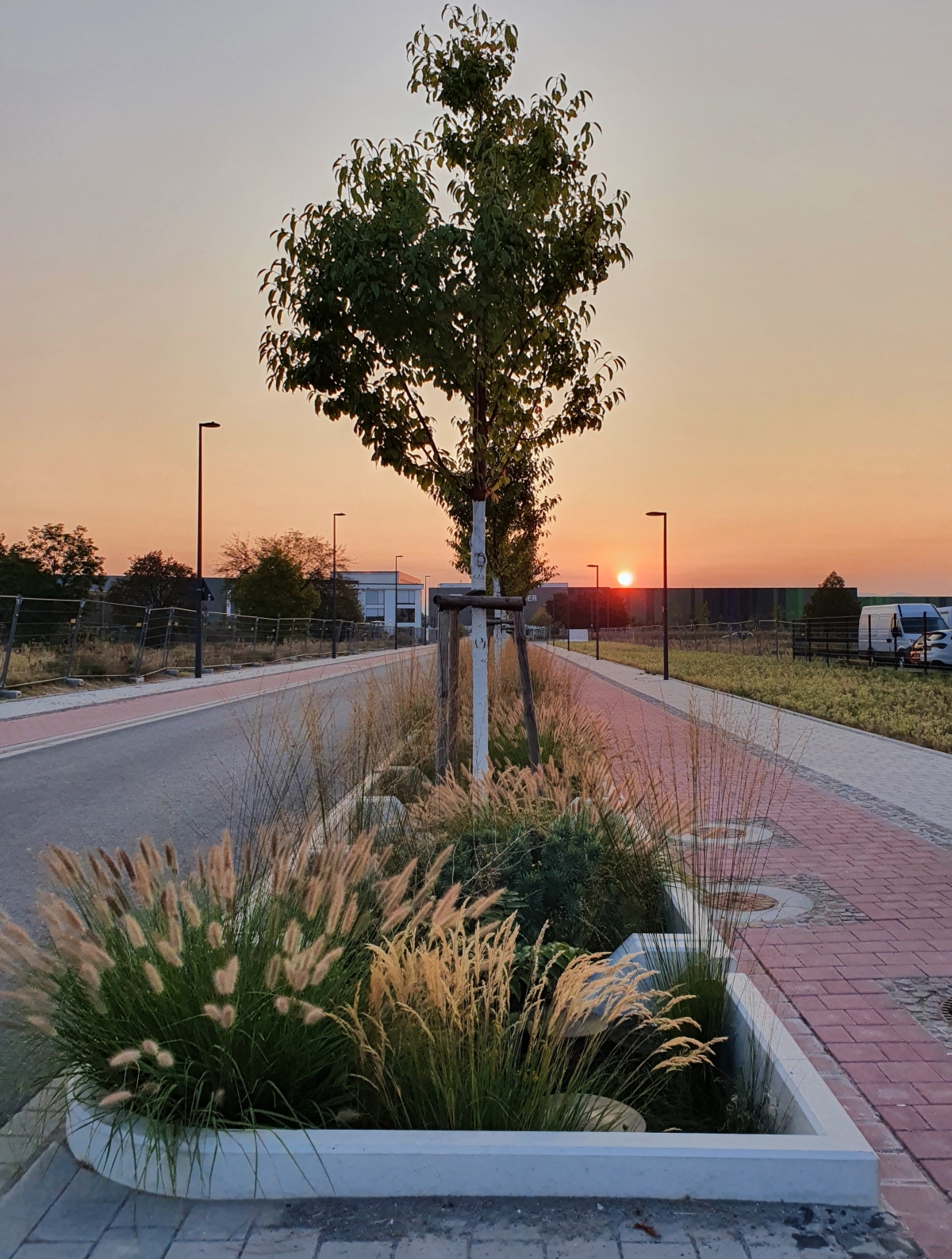
The industry's demand for drainage networks to be adapted to extreme weather events requires infrastructure that can reliably withstand current and future impacts. Solid concrete construction methods offer inherent advantages here: positional stability, buoyancy safety, and static robustness are technical prerequisites for ensuring the functionality of the networks during heavy rain or flooding. The flexible design of all component geometries associated with concrete and the broad product portfolio with a focus on rainwater management are essential system components of modern concepts for climate impact adaptation.
Ecological transformation through CO₂ efficiency and circular economy
The industry outlook for 2025 also emphasizes the importance of manufacturer responsibility. Concrete sewer systems already address this issue during production: across almost all nominal diameters, they have a favorable CO₂ footprint and thus fundamentally support the industry's ecological sustainability goals. Complemented by the 100 percent material recyclability of concrete components and regional value chains, the member companies of the FBS offer a technically sound response to the demand for a consistent circular economy.
“The tasks outlined in the industry profile are a cross-generational joint effort,” Lanzerath concludes. “The FBS sees itself as a technical catalyst that contributes its expertise to the dialogue with associations and local authorities in order to design infrastructure for the coming decades that is sustainable and retains its value.”
CONTACT
Bundesfachverband Betonkanalsysteme e.V. (FBS)
Dr.-Ing. Markus Lanzareth
Egermannstraße 1
53359 Rheinbach/Germany
+49 2226 88 59 90