


Use of Topology‑Optimized Foam Concrete Displacement Bodies in Material-Reduced Slabs


The construction sector is among the most resource-intensive industries worldwide and accounts for more than half of global raw material consumption. Floor slabs, which constitute the largest share of concrete volume in many building types, offer substantial potential for reducing material use and associated CO₂ emissions through innovative lightweight design strategies.
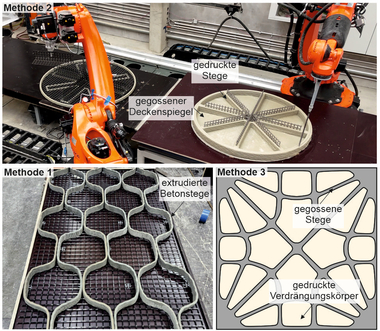
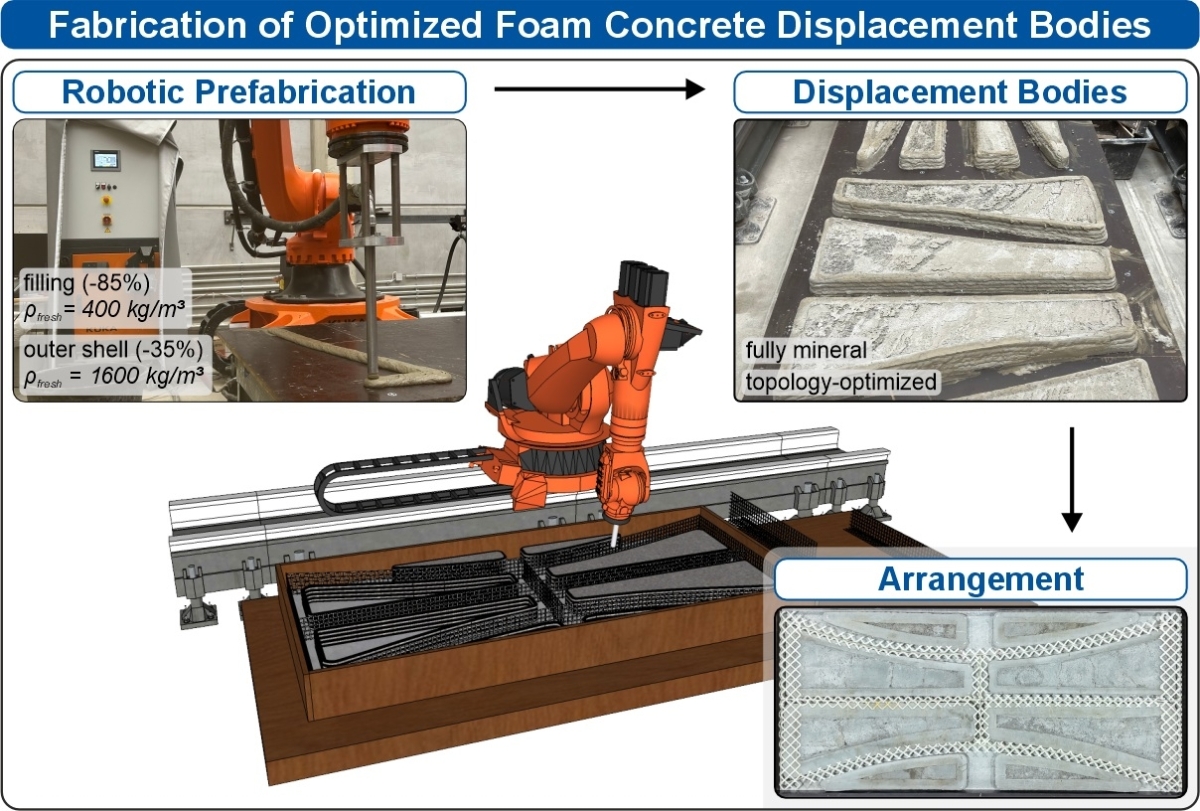
The presented slab concept translates established lightweight principles – such as Nervi slabs and voided slabs – into a digitally enabled and geometrically optimisable construction approach. Central to this concept is the integration of robotically produced, topology‑optimised foam concrete void formers. These elements are manufactured via 3D‑printing as stay-in-place shells and subsequently filled with ultra-light mineral foam. Owing to its controlled porosity, foam concrete enables considerably reduced densities and significant concrete savings while maintaining the advantages of an entirely mineral-based system.
The slab comprises an upper and lower concrete plate and an intermediate ribbed region. The rib geometry was derived from principal stress trajectories of a one-way spanning system to ensure load-path-oriented material placement. Since suitable printable foamconcrete mixtures were not available, a tailored low-density formulation was developed at the Institute for Structural Concrete of RWTH Aachen University and used for the 3D‑printed outer shells.
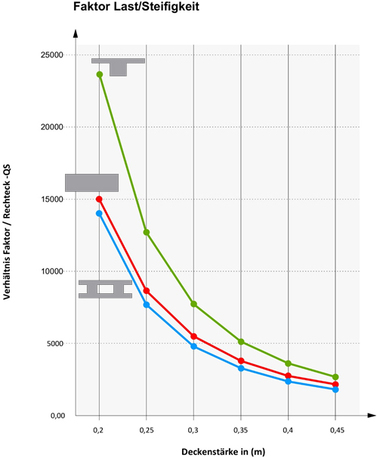
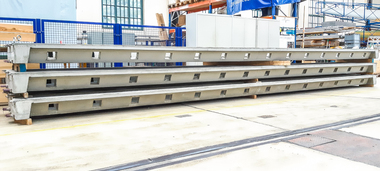
In the prototype demonstrator, approximately 20% of the concrete volume was replaced and about 15% of self-weight was saved compared to a solid reference slab. Experimental investigations confirmed that, despite the substantial material reduction, the load-bearing capacity remained within the range of conventional solid systems, thereby validating the structural feasibility and performance of this digitally fabricated lightweight slab concept.