


Modular vault design: Reversible precast ceiling system for sustainable concrete construction


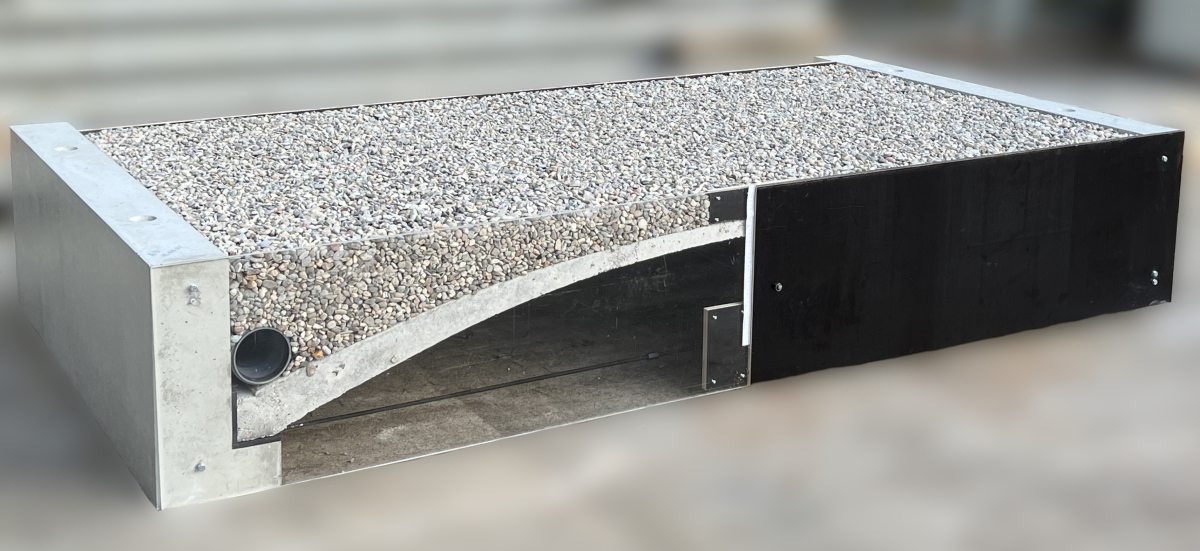
Together with the DBV, the RPTU is conducting a research project to develop a more sustainable alternative solution for conventional reinforced concrete floor slabs. The aim is to reduce concrete consumption by up to 50% by using a reversible and resource-efficient floor system. To this end, high-precision, zoned arch segments (C20/25) with a minimum arch thickness of 4 cm in the cut-out were designed in combination with prestressed longitudinal beams for serial concrete construction.
The prestressed longitudinal beams enable a particularly filigree and sustainable construction and complement the efficient overall system. Force-fit load transfer, practical dimensional tolerances, and a precisely defined installation process are crucial for activating the vault-specific load-bearing effect. Targeted, controlled cracking during installation ensures both the tolerances and the reversibility of the system.
During crane assembly, the dead weight causes initial crack formation in the arch segments, so that the arch flanks undergo elastic, horizontal deformation. After the vault elements have been placed on the support consoles of the joists, the dead weight activates the arch thrust, so that the arch is force-fit between the joists under load.
The deformation capacity of the arches ensures the necessary dimensional tolerances and guarantees non-destructive installation and dismantling. Joint grouting is completely unnecessary. A level surface is ensured by sustainable clay bulk material, which, in addition to load distribution, has a positive effect on sound insulation.
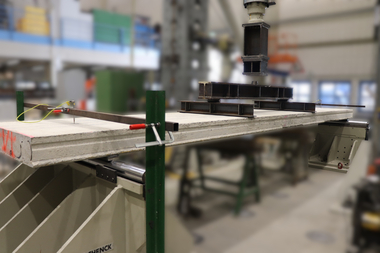
The newly developed ceiling system is being systematically tested in the laboratory for structural engineering at the RPTU. A supplementary fire assessment serves to expand the previous engineering considerations and to complete safety-related aspects.