
Koll Steine modernizes Dry Side with Individual Electric Drives
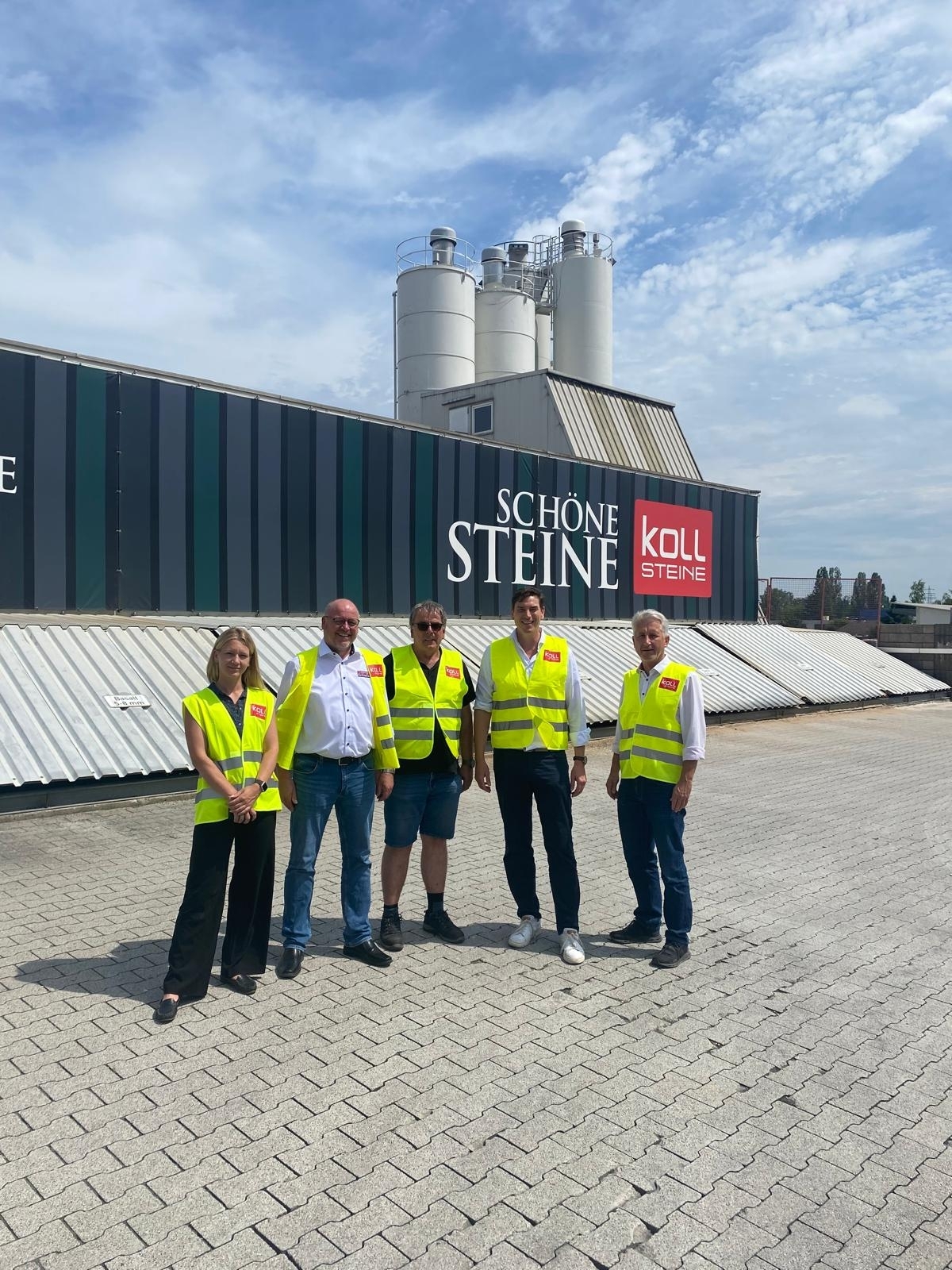
Koll Steine has comprehensively modernized the dry side of its concrete block production at its Bonn facility. Instead of completely replacing the existing plant equipment, the family-owned company decided to continue using the load-bearing plant components and to bring the drive, control, and safety technology up to current standards. The modernization focused on the systematic transition from hydraulic to fully electric drive systems.
For more than 65 years, Koll Steine has been developing and manufacturing concrete products for outdoor landscaping. The third-generation family-run company produces, among other things, paving stones, patio slabs, wall systems, steps, and other products for gardening and landscaping at its Bonn facility. According to the company, it places particular emphasis on customer focus, continuous improvement, and sustainable practices.
With the modernization of the dry side, Koll Steine is consistently continuing on this path. The goal of the investment was to further develop the production site technically, reduce energy consumption, and simultaneously improve process quality. The specific catalyst was the need to replace the aging hydraulic drive technology on the dry side. Instead of simply replacing the existing technology, the company opted for a comprehensive modernization concept based on electric drive technology with energy recovery.
“The conversion from hydraulic to electric drive systems is an important step toward the future for our facility,” says Managing Director Helge Koll. “By using electric drives, we can reduce energy consumption on our dry side by up to 40 percent.”
Frima as General Contractor
Koll Steine commissioned Frima as the general contractor to carry out the project. Frima was responsible for the design and delivery of the new drive, control, and safety systems. In addition, numerous installation and adaptation tasks were carried out in collaboration with Koll Steine’s production and maintenance staff.
Targeted Reuse of Existing Plant Structure
A key feature of the project was to continue using the existing plant structure to the extent that it made technical and economic sense. Bridges, steel structures, and other load-bearing plant components were retained and integrated into the new plant design. This made it possible to reduce the amount of material used in the modernization without sacrificing the benefits of modern control and drive technology.
Entire dry side modernized
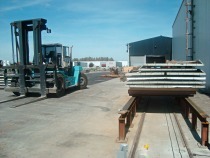
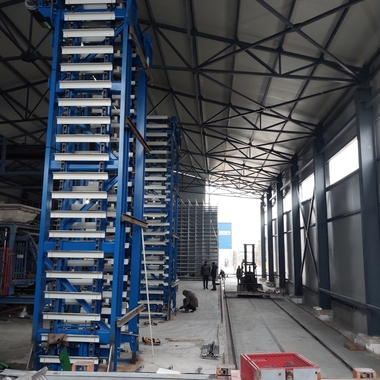
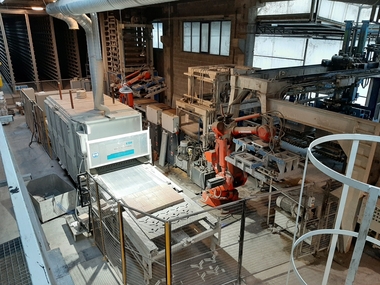
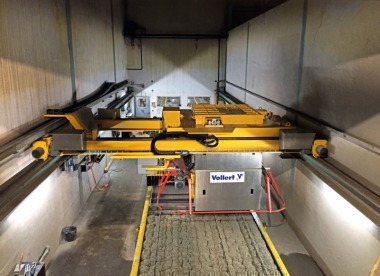
The modernization encompassed the entire dry side, including the board return conveyor. The existing lowering frame was retained but electrically retrofitted and equipped with new drive technology. The slide chute was fitted with an electric drive, and a brick separator operating on both sides was additionally installed.
In addition, a mobile brick-laying doubler with an electric gripper and a new gantry bridge was installed. The brick-stacking system was also equipped with an electric gripper; its existing gantry bridge, however, was integrated into the new design. The modernization was complemented by a new board turner.
At the same time, Frima upgraded the entire control system, including new operator consoles, visualization, sensors, and cabling. Among other things, the new visualization system enables the storage of recipes as well as the logging of messages and malfunctions. In addition, the existing plate conveyor was equipped with a modern position-measuring system.
Another key focus was the overhaul of the safety systems. To this end, a new safety concept was developed featuring different safety zones as well as new safety switches, light curtains, safety fences, and access doors.
From Hydraulics to Individual Electric Drives
At the heart of the modernization is the complete conversion of the dry side to modern, energy-efficient electric drive technology. The hydraulic drive components were removed and replaced with electric drives. The new plant design enables more precise control of all motion sequences, thereby improving both process stability and production repeatability. At the same time, the drive system is equipped with a grid-feedback feature. This allows electrical energy generated during certain movements to be fed back into the plant’s power grid.
Frima also equipped the Doppler and packaging systems with identical drive technology. This simplifies spare parts management. A Siemens S7 controller is used as the control platform, which is designed to ensure a long-term supply of spare parts and the maintainability of the software.
Modernization within a Tight Time Frame
The initial discussions between Koll Steine and Frima took place in early 2025. After the order was placed in late June, dismantling of the existing plant equipment began in mid-December. Installation of the new components began between Christmas and New Year’s, and the modernized plant was successfully recommissioned on schedule in early February 2026.
Production came to a complete halt during the modernization. To keep the production downtime as short as possible, numerous assemblies were prefabricated in advance. During the retrofit phase, the teams from Koll Steine and Frima worked together at times on a six- to seven-day workweek schedule. This allowed the production shutdown to be limited to just under two months, enabling production to resume as scheduled at the start of the season.
Initial Results Following Commissioning
According to Koll Steine, the goals associated with the modernization were achieved shortly after commissioning. The company reports a reduction in energy consumption on the dry side of up to 40%, while productivity per production cycle increased by around 10%. In addition, the company cites greater process stability, more precise control of motion sequences, and reduced maintenance requirements due to the elimination of the hydraulic system. According to the company, the significantly reduced noise levels also improve working conditions for employees.
Implementation Through Partnership
A key factor in the successful implementation was the close coordination between Koll Steine and Frima. The Koll employees’ knowledge of the existing plant complemented the technical expertise of the equipment supplier. “We were able to optimally combine our existing plant know-how with Frima’s technical expertise and complete the project on time within the tight timeframe,” summarizes Helge Koll. Frank Mansholt (Technical Sales, Frima) also highlights the collaboration between both parties: “The strong, partnership-based cooperation made a decisive contribution to the project’s success. Thanks to this constructive collaboration, we were able to successfully implement this project together.”
Outlook
Now that the modernization of the dry side is complete, Koll Steine is already looking ahead to the next phase of expansion. The company is currently evaluating the modernization of the wet side of production. The goal is to further reduce energy consumption, optimize production processes, and gradually advance the site’s technological capabilities.
CONTACT
Koll GmbH & Co. KG Betonsteinwerke
Maarstr. 85-87
53227 Bonn/Germany
+49 228 4 00 64 0
FRIMA GmbH & Co. KG
Stedinger Str. 12
D-26723 Emden/Germany
+49 4921 584 0
www,frima-emden.de