

Clean cities by means of photocatalysis

Less nitrogen oxides, more beautiful surfaces

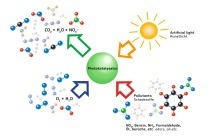
Compliance with the limits set by the EU for nitrogen oxides is still posing a challenge for cities and municipalities. Contrary to measures such as driving bans, which have a negative impact on citizens and businesses, photocatalytically active construction products reduce the concentration of nitrogen oxides by converting the pollutant gas into nitrate. As a result, an increasing number of cities use not only photocatalytically active pavers but also other types of road surfaces such as concrete and asphalt pavements.

A special type of titanium dioxide added to the construction product acts...
Related articles:

Issue 01/2015

Increasing efficiency in the degradation of airborne pollutants by photocatalytically modified concretes

1. Introduction EU legislation increasingly defines limits for airborne pollutants as our awareness of the environment is growing, which directly influences our health and well-being [1]. Vehicle...

more
Issue 09/2013 Helio Clean/Dyckerhoff

Research project on nitrogen oxide reduction

From 2009 to 2012, the “Helio Clean” project funded by the Federal Ministry of Education and Research dealt with the catalytic disintegration of air pollutants under sunlight exposure using building...

more
Issue 04/2011 Photocatalytic activity of cement-bound systems

Comparison of two test methods

Up to this day, no uniformly standardized measurement and materials standards are available. Laboratory-scale measuring methods for quantifying the photocatalytic activity of surfaces are available....

more
Issue 04/2015 Submitted by/Eingereicht von: Steag

Innovation: Photoment

Photoment is a concrete admixture with photocatalytic activity. It consists of a combination of flyash particles and different titanium dioxides (TiO2). On a photocatalytic surface, under the action...

more
Issue 09/2013

Air purification using concrete products manufactured with special cement

Nitrogen oxides (NOX) are one of the most critical groups of air pollutants in the vicinity of major urban roads. One of the options to reduce the concentration of these pollutants in the air we...

more