
Revolution or something old in a new look?

Eurocode 2

On July 1, 2012, Eurocode 2 will be introduced in Germany on a mandatory basis and it replaces the national standard DIN 1045-1 being valid until then.

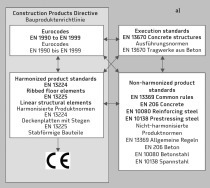
For some time now, Europe has also been growing to-gether in terms of technical building authority approval. Already in the 1980s, the European Commission decided to harmonize the technical guidelines in the field of load-bearing structures and the design of building structures as well as to facilitate European cross-border activities. Thus, the first generation of the Eurocode for structural engineering was created. In 1989, the Commission assigned the job to the European Standards Organization (CEN = Comité Européen de Normalisation).

European harmonization of national standards has already...
Related articles:

Issue 06/2012

Introduction of the Eurocodes in Germany

This year, the introduction of the structural engineering Eurocodes in Germany marks another step on a long path that began more than 50 years ago, with the ultimate objective of establishing the free...

more
Issue 07/2012

Eurocodes and German Annexes in English

Beuth Verlag GmbH provides a new online service especially for foreign construction companies by developing the English version of „Eurocode online“. Apart from the Eurocodes, the service includes...

more
Issue 02/2013

The implementation of European standards in Germany

Construction standards establish uniform specifications of product characteristics, test methods to determine such characteristics, actual construction works and the design of buildings and...

more
Issue 04/2014 Kucherenko Institute

Eurocodes for Russia

So far, nobody on the staff of the Central Scientific Research Institute for Building Structures V.A. Kucherenko (Tsentralny nauchno-issledovatelski institut imeni V. A. Kucherenko, see also...

more
Issue 05/2016 Punktum.Betonbauteile

Position 02/2016

BFT International publishes this article jointly with the German associations listed below to reflect the common position of these organizations with respect to a current topic relevant to the German...

more