


Schöck Isolink C-Y: New facade anchor for core-insulated sandwich walls
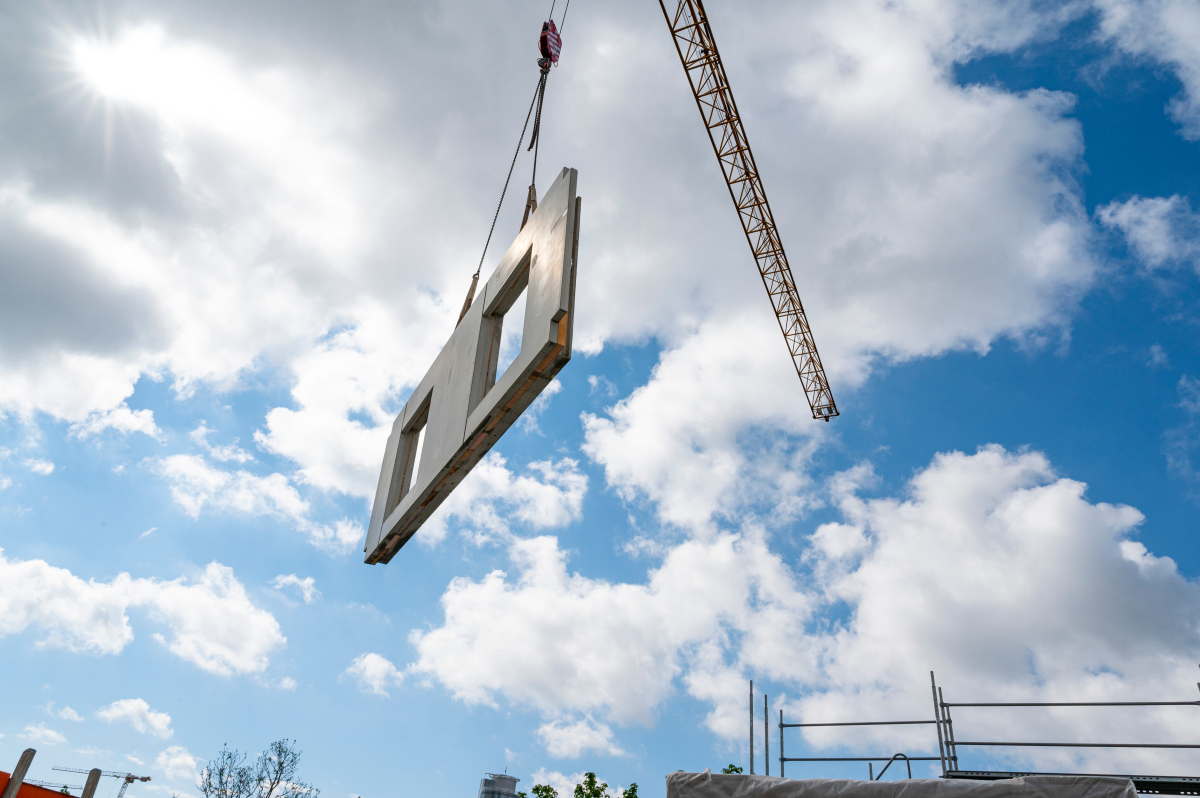


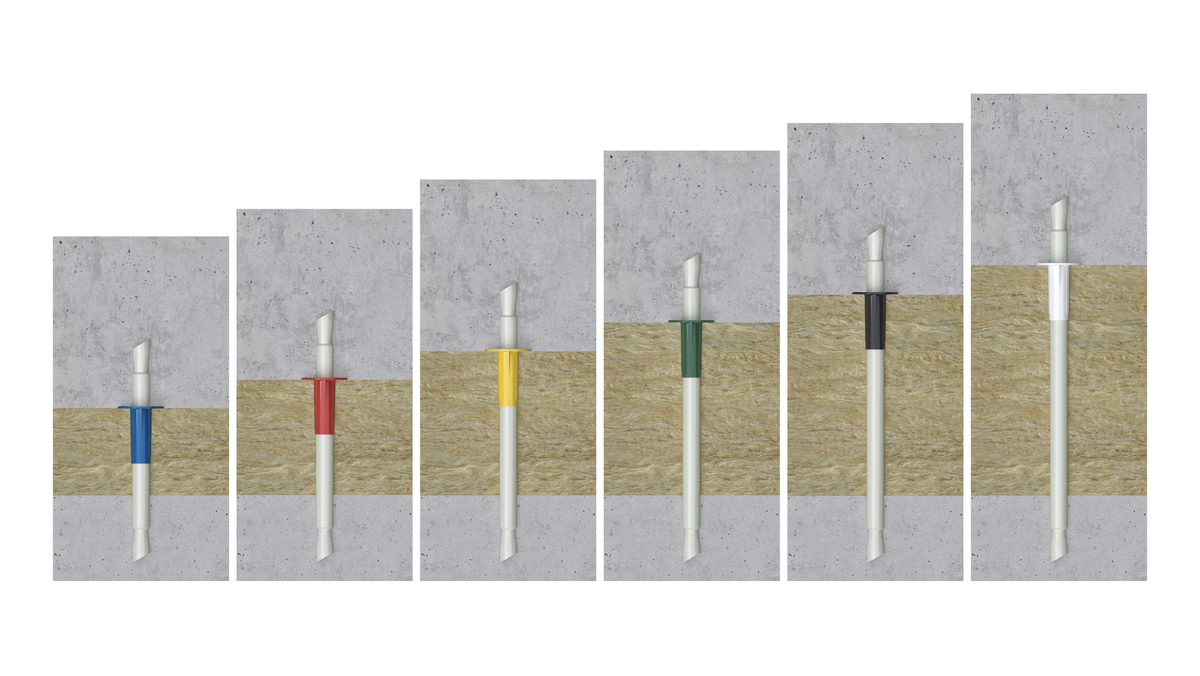
With Isolink C, Schöck offers a thermally decoupled fastening solution for precast concrete facade systems. The component manufacturer has now expanded the product family with the new Isolink C-Y. This ensures that precast plant operators always have the right anchor on hand when manufacturing concrete sandwich walls. Thanks to a uniform embedment length, Isolink C-Y also reduces storage and administrative costs at the precast plant. Furthermore, precast plants benefit from a uniform installation grid for standard walls, eliminating the need for dimensioning. This saves time and supports standardized production processes. Isolink C-Y holds a European Technical Approval (ETA) as well as an Environmental Product Declaration (EPD).
Specifically for sandwich walls
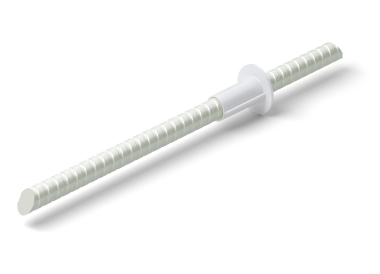
Isolink C-Y is an anchor with a depth limiter and was developed specifically for sandwich walls with an insulation thickness of 60 to 160 mm. The embedment depth in the concrete shells is always 50 mm, regardless of the wall thickness. This enables a streamlined product range. Contractors in precast plants therefore need to stock fewer variants, which reduces storage and administrative costs.
Visually, Isolink C-Y is characterized by a smooth shaft and undercuts on both sides. This ensures secure anchoring in the concrete. Simple quality control is possible thanks to the different color coding of the depth limiter for each insulation thickness.
Reliable fastening
Isolink C-Y offers higher load-bearing capacity: During production, this reduces the number of anchors required per square meter of facing shell. Thanks to the standardized installation grid for common wall constructions, no dimensioning is necessary. This simplifies planning processes and gives designers additional freedom in the design and execution of concrete facades. Additionally, material usage in production can be reduced.
Quick and easy installation
Installation, which is compatible with all insulation materials, requires only a few simple steps: The rod is inserted into the pre-drilled holes in the insulation layer or, alternatively, screwed in using the installation aid. The round cross-section ensures consistent load-bearing capacity in all directions, offering direction-independent properties that support fast and secure installation. Combined with the uniform installation grid, this enables quick and repeatable installation without the need for time-consuming individual verifications.
The insertion depth is secured by the depth limiter. Thanks to the short embedment length, the anchor is no longer visible on the exposed side starting at a facing shell thickness of 60 mm. This preserves the surface quality of exposed concrete on facades and walls.
Thermal decoupling, reducing thermal bridges
Schöck Isolink meets energy efficiency requirements through Combar, a glass fiber composite material developed and produced in-house. The material exhibits high tensile strength and low thermal conductivity. By comparison: With a thermal conductivity of 0.7 W/mK, Isolink’s thermal insulation properties are approximately 15 times better than those of stainless steel (λeq = 15 W/mK) and approximately 200 times better than those of aluminum (λeq = 200 W/mK). Isolink thus represents an energy-efficient alternative to stainless steel or aluminum fasteners and enables a solution with minimal thermal bridging when connecting the concrete shells of core-insulated sandwich or precast walls.