


Peri UK and Reckli on Cost Analysis for Architectural Concrete Projects

Clients increasingly expect concrete structures to deliver both structural performance and visual quality. Under cost pressure, architectural concrete finishes are often simplified or removed before delivery options have been fully explored. The cost of architectural concrete is frequently assessed using liner purchase costs rather than liner reuse rates and overall project efficiency.
Peri UK and Reckli argue that formwork design, liner selection, and construction sequencing should be considered together to improve certainty and maximise value. Infrastructure projects are demonstrating how repeatability and reuse can help make architectural concrete more commercially viable on a wider range of projects.
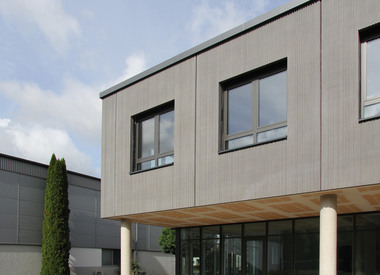
Across the construction industry, concrete is being asked to do more than ever before. Whether it is a bridge, retaining wall, railway structure, commercial development, or public building, clients increasingly expect concrete to contribute to the visual quality of a project rather than simply perform a structural role. At the same time, contractors continue to face intense pressure on cost, labour, and programmes. The result is a familiar challenge: how do you preserve design quality without increasing project costs?
Design ambition meets construction reality
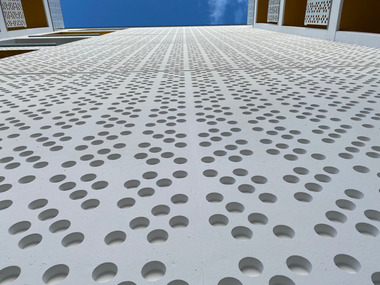
Architectural concrete has traditionally been associated with landmark developments and prestige projects. Textured finishes, patterned surfaces, and bespoke concrete detailing are often viewed as desirable additions that become vulnerable when budgets are scrutinised.
Yet Peri UK believes many of these decisions are being made before contractors have a complete understanding of the delivery options available. “We regularly see architectural finishes being removed from projects before contractors have had the chance to fully evaluate how they can be delivered,” explained Neale Beardsley, head of construction accessories at Peri UK.
“The challenge isn‘t usually the finish itself. It‘s that the finish, formwork, and construction sequence are often considered separately. Once those conversations happen together, opportunities start to emerge that weren‘t visible before. One of the advantages of our closer collaboration with Reckli is that contractors can come directly to us for both their formwork and architectural liner needs in a single coordinated process that makes those conversations easier to have at the right stage of a project,” he continued.
Looking beyond the headline cost
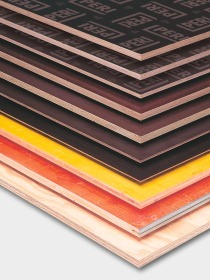
A common misconception, according to both companies, is that the purchase cost of a form liner represents the true cost of achieving an architectural finish. In reality, liners are designed to be reused.
In many cases, contractors attempting to reduce costs may end up recreating architectural effects manually using site-made solutions. While these approaches can appear economical initially, they often require additional labour, make consistent quality harder to achieve, and increase the likelihood of remedial work. As a result, the debate is often less about whether architectural concrete costs money and more about where those costs ultimately appear.
Designing for repeatability
To address this challenge, Peri UK and Reckli have spent the last several years working more closely together to integrate formwork planning and liner design earlier in the delivery process. Rather than requiring contractors to independently coordinate formwork and liner requirements, they can source everything needed directly from Peri with formwork layout, reuse strategy, sequencing, and installation requirements considered as part of a single construction solution.
The goal is not simply to reduce cost, but to increase certainty. By speaking to Peri about both formwork and form liner needs, contractors can gain earlier visibility of how the specified finish will interact with formwork layouts, sequencing, and liner reuse opportunities before procurement decisions are finalised.
A wider industry conversation
For Reckli, the discussion reflects a broader change in how clients view concrete construction. Joe Russell, technical sales manager at Reckli said: “Across Europe, we are seeing growing expectations around the visual quality of concrete structures. Clients increasingly want buildings and infrastructure that contribute positively to their surroundings rather than simply fulfil a functional purpose. By approaching Peri directly to discuss formwork and form liners at the same time, we can help ensure those ambitions remain practical and commercially viable. Designing for repetition, reuse, and efficient construction as part of the formwork strategy is becoming increasingly important in achieving that balance.”
As contractors balance growing expectations around quality with ongoing pressure on budgets, both Peri UK and Reckli believe the industry may need to reassess some long-held assumptions. The question is no longer whether architectural concrete adds value. The question is whether projects can afford to remove that value too early in the design process.
CONTACT
Peri Ltd
Formwork Scaffolding Engineering
Market Harborough Road
Clifton upon Dunsmore
Rugby, Warwickshire
CV23 0AN/United Kingdom
+44 (0)1788 861600
Reckli GmbH
Industriestraße 36
44628 Herne/Germany
+49 2323 1706-0