


First modular house made of standard concrete using a new mobile 7-axis printing system
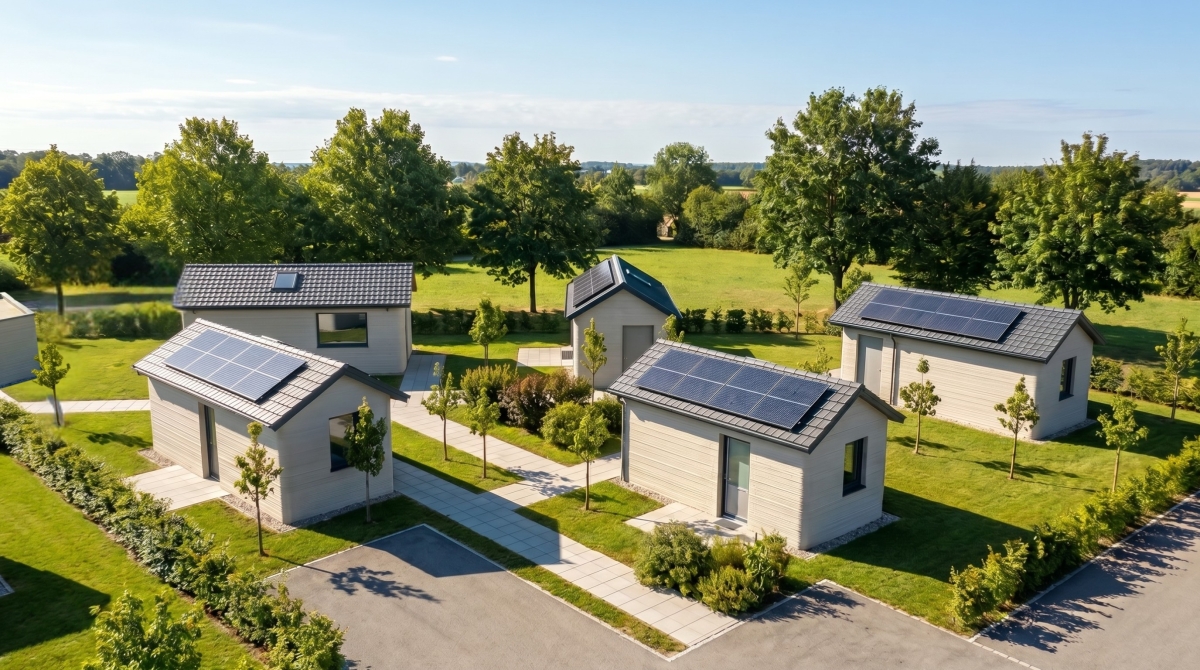


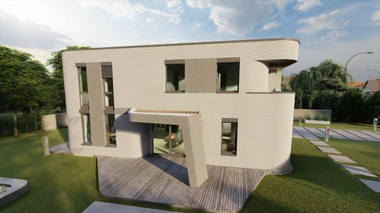
With an innovative pilot project, Rupp Gebäudedruck GmbH and its partners are further advancing the development of 3D building printing: For the first time, the company has produced a modular house from its “Ready4Space” architectural series using a new mobile 7-axis printing system. The model printed was “Pluto,” a modern residential module with 23 square meters of living space, a gable roof, and a distinctive 3D-printed facade structure. The building is set to become part of a modular housing community in the Weißenhorn region.
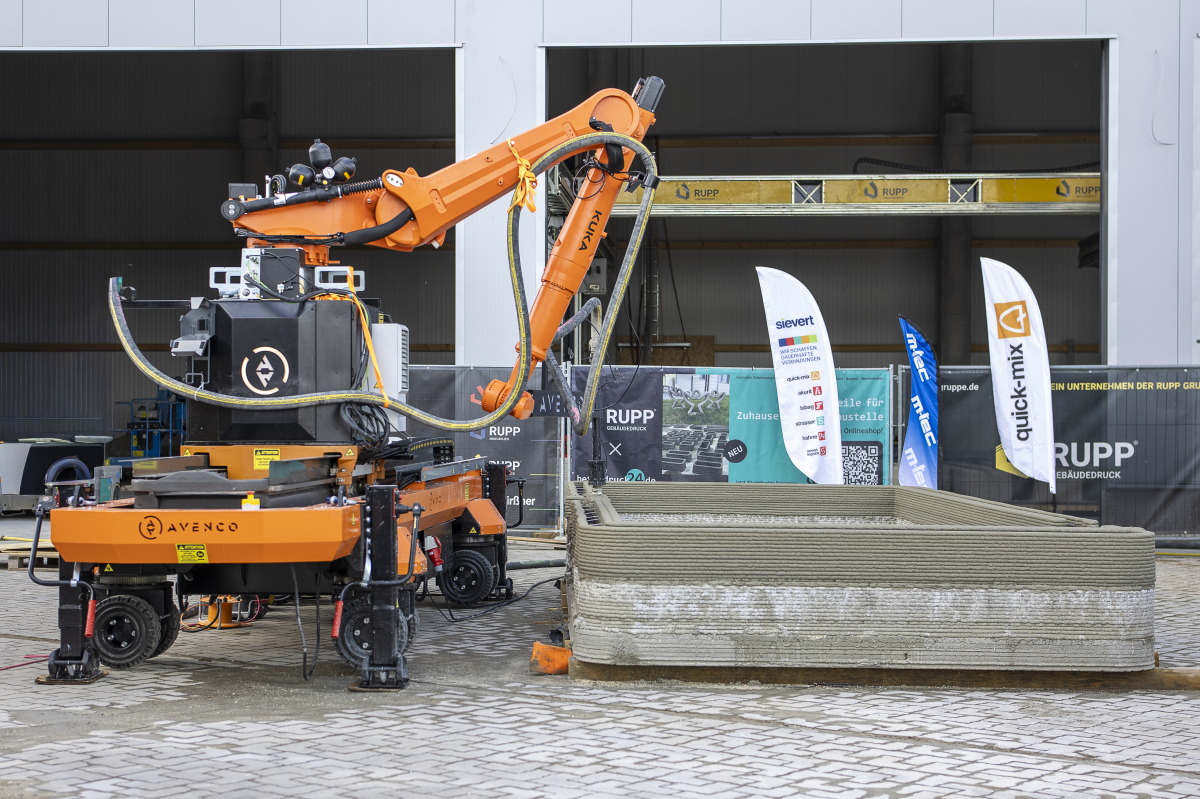
The technology used is particularly noteworthy: a mobile 7-axis printing system from Avenco, officially developed in partnership with Kuka, was employed. Combined with mixing and pumping technology from M-tec Mathis Technik and an innovative standard concrete from Quick-mix, a Sievert brand, a high-quality residential module emerged from the printer in a short amount of time. “Our goal is to bring building printing out of the niche and into widespread application. To do this, we need solutions that are cost-effective, flexible, and practical. This project demonstrates exactly that,” explains Michael Oßwald, Managing Director of Rupp Gebäudedruck GmbH. “With the new printing system and standard-compliant concrete, we are laying the groundwork for producing modular homes even more efficiently and on a larger scale in the future.”
For Avenco, the project marks significant proof of the capabilities of its mobile 3D printing platform. “This project confirms what we set out to prove with our mobile 7-axis robot platform: that 3D printing suitable for construction can go beyond fixed gantries and be used on real, flexible construction sites,” says Berkay Dogan, CEO of Avenco. “Together with Kuka and Rupp Gebäudedruck, we have shown that robot-assisted additive manufacturing is ready for scalable, everyday use in residential construction—not just as a proof of concept.”
Standard Concrete Instead of a Special Mix
A key milestone of the project is the use of a 3D-printable recycled concrete. While building printing has often required special formulations in the past, the new process relies on an innovative standard concrete from quick-mix that can be processed safely, easily, and precisely. “The use of standard concrete opens up new possibilities for 3D building printing,” says Michael Oßwald. “This makes the technology more cost-effective and more readily available. It’s an important step toward broader market penetration.”
Modular Homes as a Response to New Living and Usage Concepts
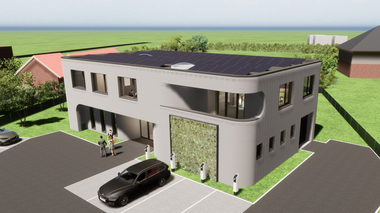
The printed modular house is part of the “Ready4Space” architectural series, through which Rupp Gebäudedruck offers high-quality, versatile modular buildings. The units are suitable, among other things, as guest houses, vacation homes, home offices, living space extensions, or for tourism concepts. The “Pluto” model is one of the most compact variants in the series and exemplifies how modern architecture, industrially prefabricated processes, and digital manufacturing can be combined. The exterior walls were produced entirely using 3D printing, giving the building a striking architectural appearance.
Strong Partner Network for the Future of Construction
The project was developed in close collaboration with several specialists. Rupp Gebäudedruck handled the planning and printing. The printing technology was provided by Avenco in partnership with Kuka. M-tec Mathis Technik was responsible for the mixing and pumping technology, while quick-mix developed and supplied the standard concrete used. The subsequent outfitting of the module is now being carried out by the Rupp Group. “Innovations arise where different areas of expertise come together,” emphasizes Michael Oßwald. “This project impressively demonstrates the potential inherent in strong partnerships. Together, we are developing technologies that can make construction faster, more flexible, and more cost-effective.”
With the successful printing of the first module, the project partners view this as another important step toward the industrially scalable production of residential and modular buildings. The project in Weißenhorn is also intended to serve as a reference project for future applications and to highlight the possibilities of modern printing technologies in the construction industry.