

State of research and prospects

Optimizing the shear design of slabs
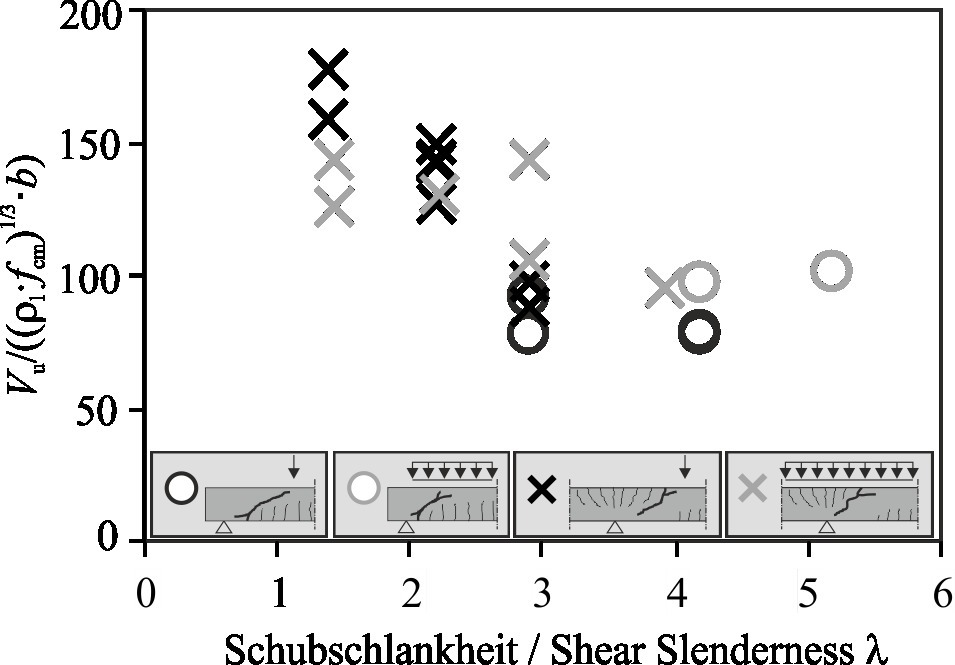
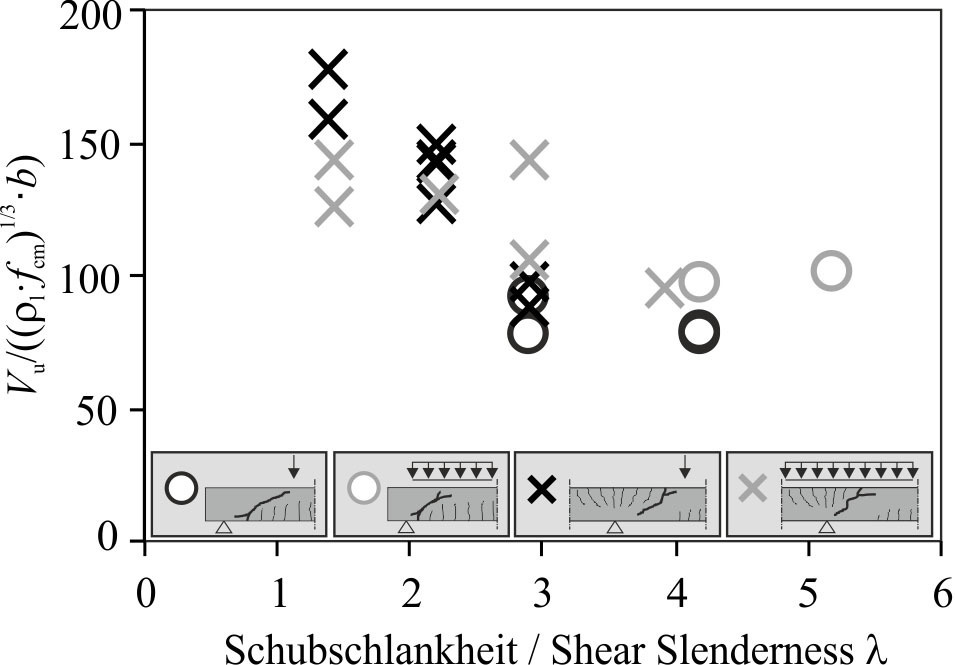
A significant amount of the used concrete volume is applied to slab structures where shear design is often determinative of the dimensioning. Since applying shear reinforcement to slabs is elaborate, structural engineers intend to omit shear reinforcement in in-situ concrete slabs in construction practice. The current shear design approach for components without shear reinforcement according to EC2 is semi-empirical and was calibrated using a database of shear tests on simply supported single-span beams under concentrated loads. Therefore, capacity increasing influences due to more realistic

mu...
Related articles:

Issue 02/2017 Effective width for shear

Shear capacity of RC slabs under concentrated loads

The present design rules for the shear capacity of reinforced concrete (RC) members without shear reinforcement in Eurocode 2 were calibrated based on a database containing the experimental results of...

more
Issue 02/2014 New design tools for practice

Punching shear –

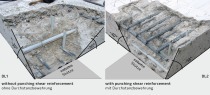
While DIN EN 1992-1-1 and the national annex of Germany treat punching shear design for in-situ concrete slabs and centrically loaded footings in great detail [1, 2], joints between semi precast...

more
Issue 02/2020 Carbon concrete bridges

Dimensioning and realization

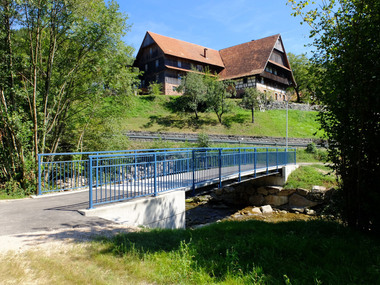
Bridge construction is a reasonable field of application for carbon-reinforced concrete. The corrosion-resistant reinforcement requires a small concrete cover. Moreover, a protective layer can be...

more
Issue 02/2017 Flat slabs and foundations

New punching shear reinforcement systems

The structural design of flat slab systems is usually governed by the punching shear resistance of the slab. To achieve a sufficient punching shear resistance at reasonable slab thickness, shear...

more
Issue 08/2017

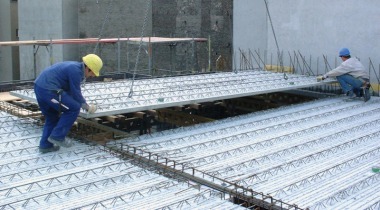
Lattice girder floor slabs – tested application as a point-supported slab

To verify the load-bearing capacity of buildings or structural components, the planning engineer uses engineering models. These are secured – in particular in the case of construction with reinforced...

more