
Design of concrete and reinforced concrete components in ­accordance with EC2

New DAfStb Issues 630 and 631 supersede Issues 220 and 240

Issues (“Hefte”) 220 and 240 published by the German Committee for Structural Concrete (DAfStb) have been widely used in engineering practice ever since their first editions appeared. These guidelines proved to be valuable aids in both structural design and structural integrity verification. Issue 220 primarily provides guidance, tables and nomograms for ULS design (combined bending and axial load, shear, torsion) and verification of buckling safety. Issue 240 concentrates on guidance and recommendations for determining internal forces (for framed structures, slabs, deep beams), SLS...

Related articles:

Issue 02/2016 based on the Eurocodes and new insights

Revision of DafStb Heft 220 and 240

Hefts (Issue) 220 [1] and 240 [2] of the German Committee for Reinforced Concrete (DAfStb) have been intensively used by engineers in day to-day practice since the first edition. They have proven to...

more
Issue 03/2025 Day 3: Thursday, 13th March 2025

Panel 13: Concrete in structural design

85 Climate-friendly concrete construction using standardized benchmarks – The GHG guideline published by the DAfStb Klimaschonender Betonbau mit genormten Benchmarks – Die THG-Richtlinie des...

more
Issue 03/2025

Climate-friendly concrete construction using standardized benchmarks – The GHG guideline published by the DAfStb

The construction industry contributes significantly to climate change owing to the quantities consumed and greenhouse gases emitted, which are also referred to as embodied emissions. This is...

more
Issue 02/2019 The new DBV Code of Practice on “Multi-Story and Underground Car Parks”, 2018 Edition

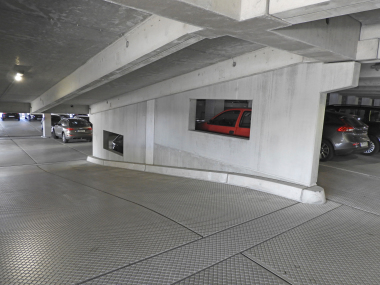
Initial experiences and design notes

For the design and realization of parking structures, the German Society for Concrete and Construction Technology (Deutscher Beton- und Bautechnik-Verein) had issued the Code of Practice on...

more
Issue 02/2021

DAfStb guideline on “Structural concrete members with non-metal reinforcement”

Developments in the field of non-metal types of reinforcement are emerging both in Germany with the C3 project (e.g. [1]), technical approvals and pilot projects, and in Europe with the...

more