


Compressive strength classes and performance classes of ultra-high-performance concrete (Part 1)
![Fig. 1: Mean values of compressive strength fcm for different specimens of Series 1 to 8 and spread of individual test results [8]](https://www.bft-international.com/imgs/1/5/9/2/0/8/6/HA_1064_Fig.01_Bild_1_NEU-e0e8c4ca141a9196.jpeg) Figure: Leutbecher/Riedel
Figure: Leutbecher/Riedel
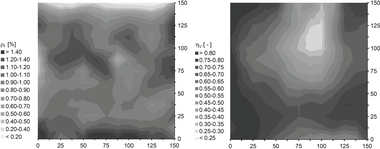
![Fig. 2: Ratios fcm,cyl100/fcm,cube100 (left) and fcm,cyl150/fcm,cyl100 (right) of Series 1 to 8 as function of the mean concrete compressive strength fcm,cyl150 [8]](https://www.bft-international.com/imgs/1/5/9/2/0/8/6/HA_1064_Fig.02_Bild_2-81e024357c343af0.jpeg) Figures: Leutbecher/Riedel
Figures: Leutbecher/Riedel
![Fig. 3: UHPFRC specimens: Types, denomination, and fabrication [13]](https://www.bft-international.com/imgs/1/5/9/2/0/8/6/HA_1064_Fig.03_Bild_3-41649127286ae188.jpeg) Figure: Leutbecher/Riedel
Figure: Leutbecher/Riedel
![Fig. 4: Loading direction and predominant fiber orientation (qualtitative) in compression tests on cubes [13]](https://www.bft-international.com/imgs/1/5/9/2/0/8/6/HA_1064_Fig.04_Bild_4-91144b067c720d54.jpeg) Figure: Leutecher/Riedel
Figure: Leutecher/Riedel
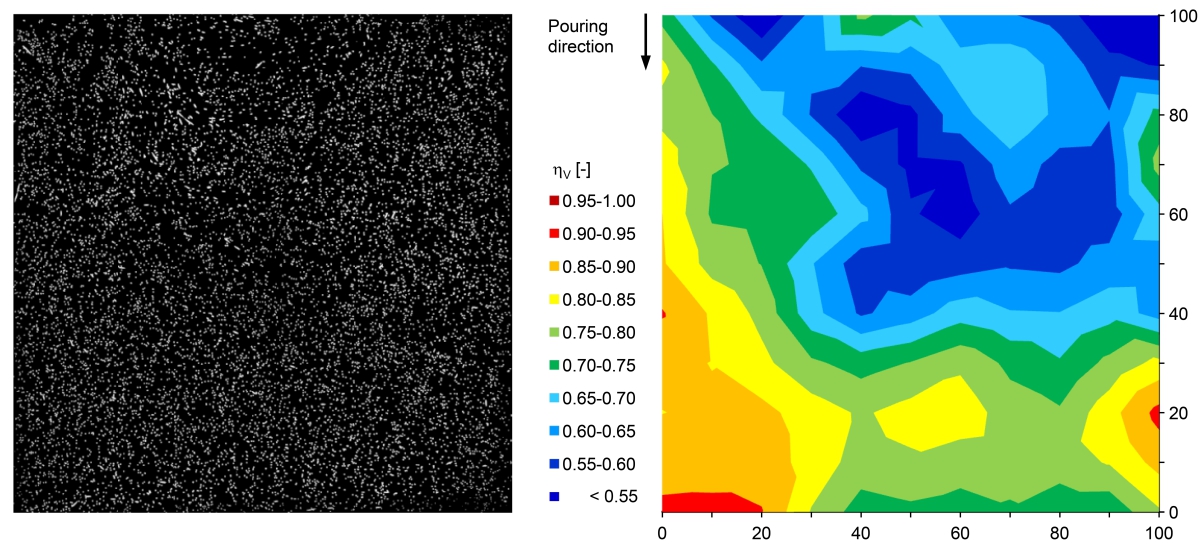 Figure: Leutbecher/Riedel
![Fig. 6: Mean values of compressive strength fcm of different specimens and test series and spread of individual test results [13]](https://www.bft-international.com/imgs/1/5/9/2/0/8/6/HA_1064_Fig.06_Bild_6_NEU-e19a38ad6404c31a.jpeg) Figure: Leutbecher/Riedel
Figure: Leutbecher/Riedel
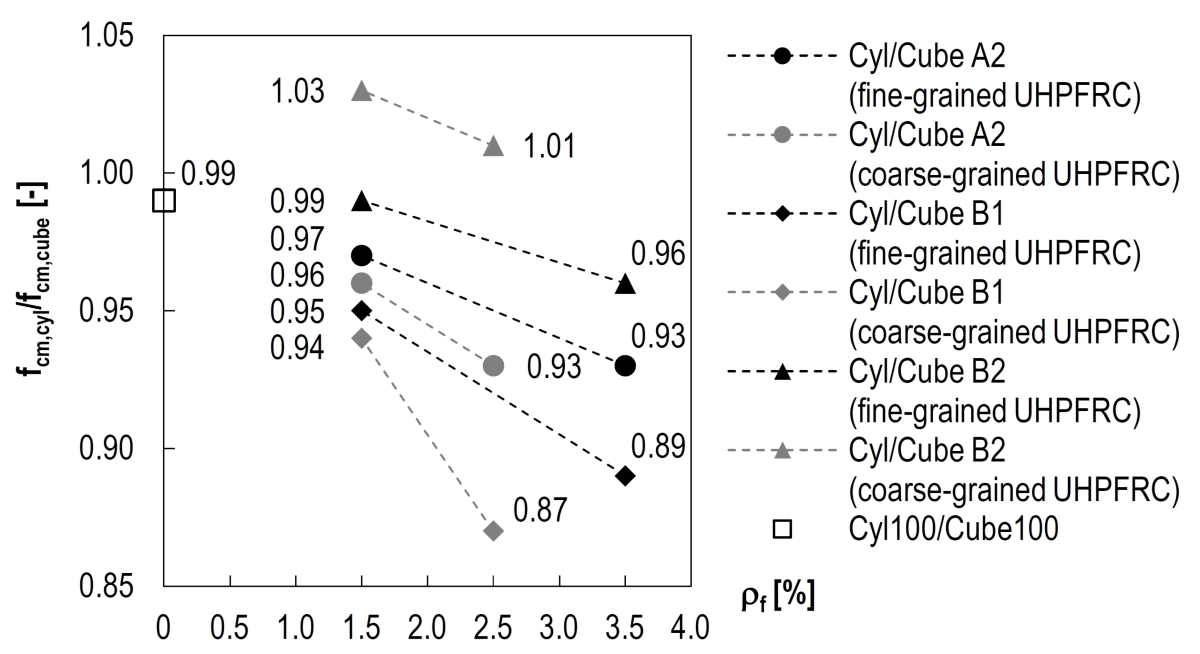 Figure: Leutbecher/Riedel


At present, a national technical approval or an approval on a case-by-case basis is required for structural applications of concretes >C100/115 as well as steel fiber reinforced concretes >C50/60. This holds true likewise to the application of ultra-high-performance concrete (UHPC), which is not yet regulated in Germany. This two-part paper presents the intended classification and reports on the backgrounds and test methods; please read the first part here.
1 Introduction
The spectrum of normal weight concretes covered by DIN EN 206 [1] and DIN EN 1992-1-1 [2, 3] ends at compressive strength class C100/115 in Germany at present. The characteristics and the application of steel fiber reinforced concrete are regulated in Germany by the DAfStb Guideline „Steel Fibre Reinforced Concrete“ [4] up to compressive strength class C50/60. A national technical approval of the Deutsches Institut für Bautechnik (DIBt) or an approval on a case-by-case basis granted by the supreme building authority is currently required for the structural application of (steel...