


Why does not any concrete mixer perform “well”?
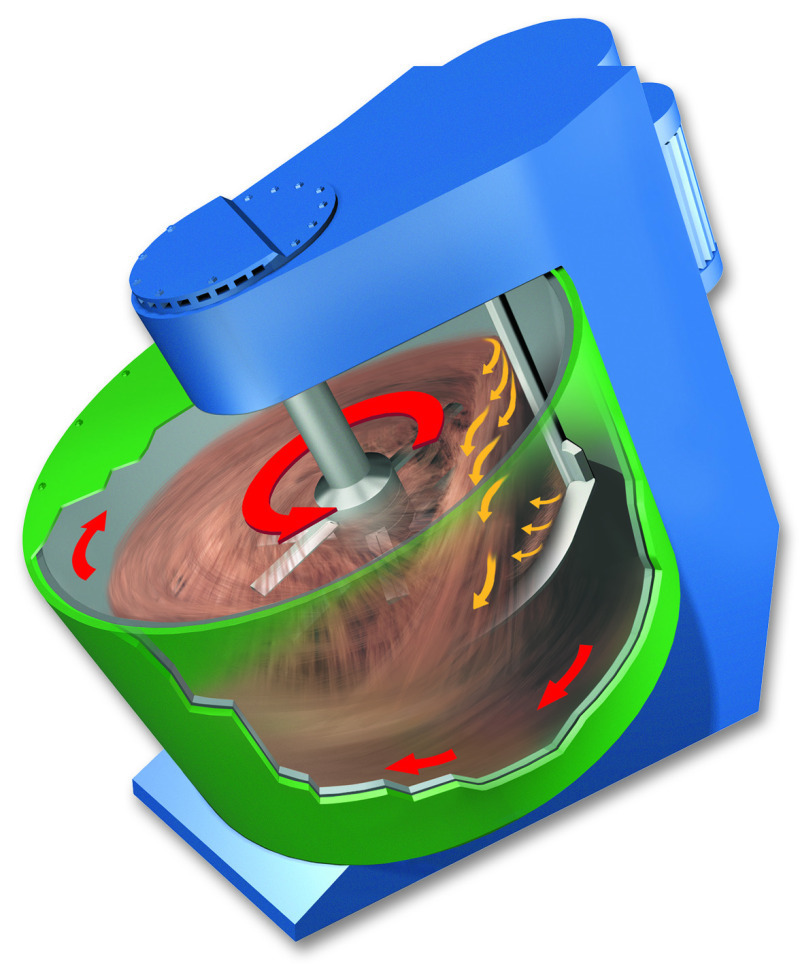
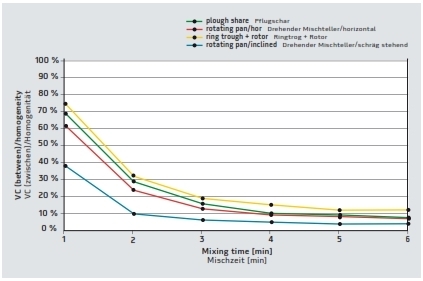
In accordance with the state of the art, standards stipulate in general comprehensive and objective criteria when describing processes or properties. However, this is not always true when it comes to concrete.
Though the properties of the aggregates, the cement types, the mixing water, the admixtures and the additives are specified in standards and indicated to the user; there are no obligatory instructions at all for the process of bringing these constituents together: the mixing of concrete. In this regard, the rules and regulations rely on the gut feeling of the user.
For the mixer, the German standard DIN EN 206-1, for example, only requires a uniform dispersion but not a good dispersion: “9.6.2.3 Mixer: The mixers have to be able to achieve a uniform dispersion of the constituent materials...