


New possibilities of concrete technology


Columns for high-rise buildings are designed and constructed both by the in-situ and the precast construction method. The decision on the suitable method chosen is influenced by such criteria as cost, deadline and quality requirements. When the precast construction method is found to be advantageous, a further distinction can be made between reinforced-concrete and composite steel solutions [1].
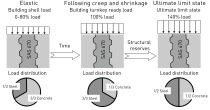
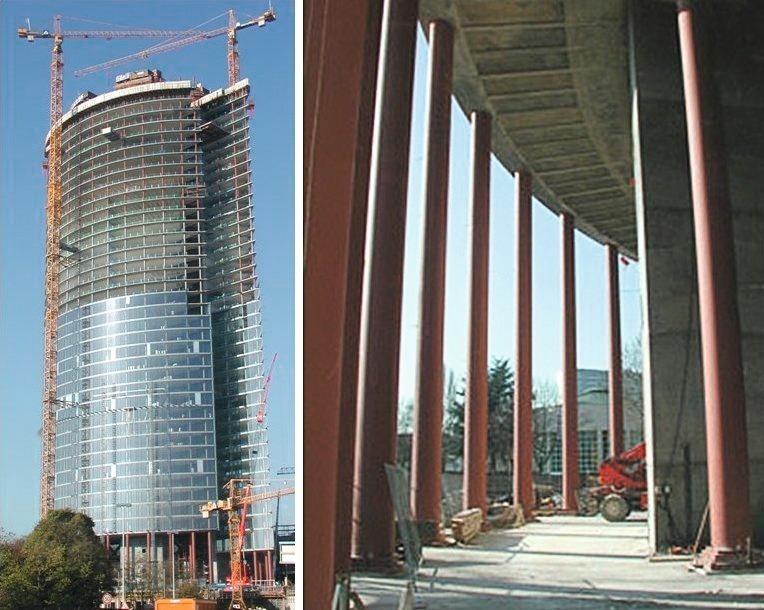
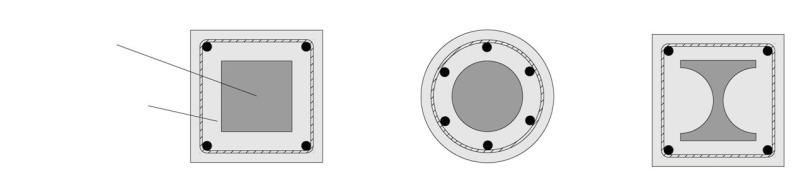
Columns for high-rise buildings which have high demands on the architectural perception (Fig. 1) are often constructed as composite steel columns. This construction method enables the design of members of great slenderness and high loadbearing capacity with small cross-sections. Due to the limitations imposed by the national design rules, members of the desired great slenderness and high loadbearing capacity can currently often not be realized with the reinforced-concrete construction method.
This article reports on the theoretical and experimental investigations carried out at the iBMB...