


Using chloride-containing recycled aggregates in RA concrete – but where are the limits to their application?




It is becoming increasingly important to use recycled construction materials in concrete to reduce demolition waste and limit sand and gravel extraction. In this respect, structures of our transport infrastructure are particularly interesting because they potentially yield high-quality recycled materials, which are usually characterized by low variance, high strength, and low porosity. However, recycled materials recovered from bridges, concrete roadways, or car parks often contain chlorides from their previous use. This poses a potential corrosion risk for new structures to be built with chloride-containing recycled materials. This is why currently applicable codes and guidelines define threshold values for the chloride content of recycled materials.
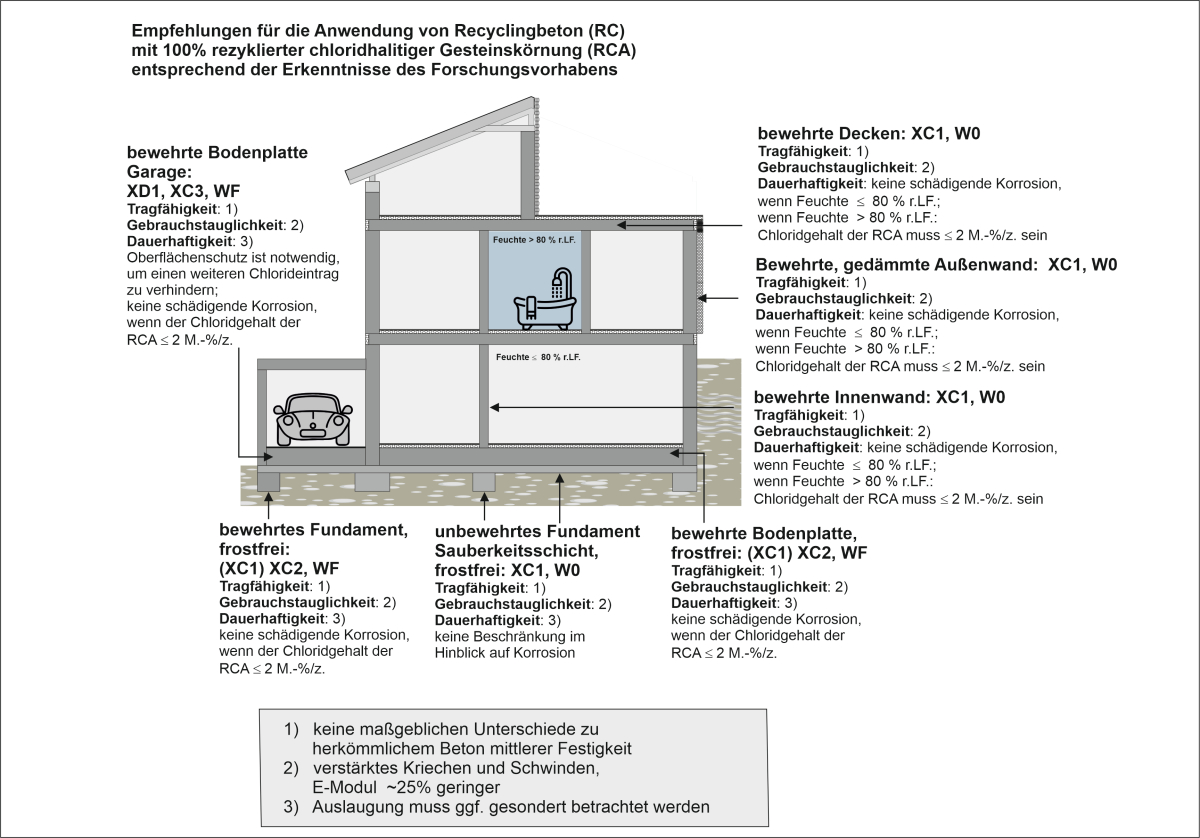
As part of an international research project, extensive tests were performed on demolition materials from underground car parks and bridges. Recycled-aggregate concrete containing 100% chloride-containing recycled aggregate (RCA) was produced for various exposure classes and tested for its properties in the fresh and hardened state, its chloride-binding behavior, and its durability regarding chloride-induced reinforcement corrosion. Chloride-binding behavior was determined by eluate analyses and leaching tests. The results showed that chloride mobility depends on the origin of the RCA, whereby synthesized chloride-containing RCA includes a greater portion of unbound chloride.
Corrosion behavior was evaluated using a three-electrode setup for chloride contents of 1.5, 2.0 and 3.0% by weight of cement in the RCA. Relevant corrosion parameters were determined by ZRA elemental corrosion current measurements at various ambient humidity levels. The results demonstrate that chloride-containing RCA can be used in recycled-aggregate concrete also in the presence of high moisture if chloride ratios remain below a critical level. Based on these test results, critical chloride ratios of 3.0 wt.%/c and 2.0 wt.%/c relative to RCA can be defined for CEM I-RC and CEM III concrete, respectively.