


Resource-efficient architectural concrete


For the last three decades, Hering Group based in Burbach, Germany, has been pioneering sustainable construction. In 1996, it became the first-ever European construction contractor with a certified environmental management system. This presentation showcases groundbreaking advancements in resource-efficient architectural concrete façades marketed under the Hering Architectural Concrete brand.
The presentation will focus on three key areas of activity related to the sustainable design of panel-shaped precast elements made of architectural concrete, namely non-metallic reinforcement, low-carbon cements, and recycled aggregates.
Of particular importance is the nearly 20-year-old betoShell textile-reinforced concrete technology, which uses glass fiber and carbon fabrics and a CEM II/A-LL Portland limestone cement. An updated Environmental Product Declaration (EPD) confirms its remarkably low greenhouse gas emissions of only 13 kg CO2-eq/m² in relation to the raw materials.
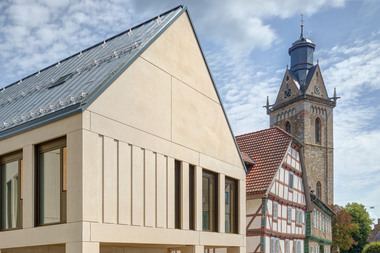
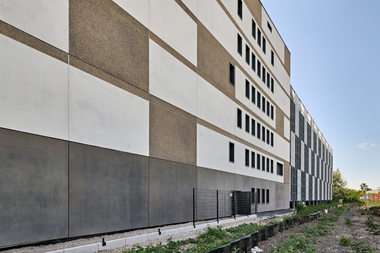
Pioneering the use of recycled construction materials for concrete façades exposed to the elements, Hering completed groundbreaking projects such as the Korbach town hall building in 2019. Since then, the company has worked to make the recycling approach visible and tangible through a variety of surface finishes, as demonstrated by the Innovation Greenhouse in Bonn. This building is the first to feature a continuous sandwich façade made of recycled-aggregate concrete with varied interior finishes, including smooth-faced, exposed-aggregate, acid-washed, and sandblasted surfaces.
This presentation also discusses most recent developments, such as using CPC slabs with prestressed carbon reinforcement and implementing concepts for integrating photovoltaics and façade greening. It culminates in combining all three components of sustainability in the betoShell design with recycled aggregates. First installation of this system is scheduled for 2026/2027 and will also incorporate the concept of urban mining.