


Maximizing clinker reduction by new admixtures and a high limestone powder ratio

The global cement industry is facing the challenge of having to reduce its carbon emissions in a sustainable manner. Besides geological storage (carbon capture and storage; CCS), another option is to lower the proportion of clinker significantly by using other, less carbon-intensive reactive materials such as blast-furnace slag, fly ash, activated clays, mining slag, incinerator ash, or volcanic ash. One disadvantage of this approach is that most of these clinker substitutes tend to be less reactive than clinker, resulting in lower strength values. To make up for this deficit, such composite types of cement are usually mixed at a significantly lower water/cement ratio, which requires the addition of highly efficient superplasticizers with a novel chemical design.
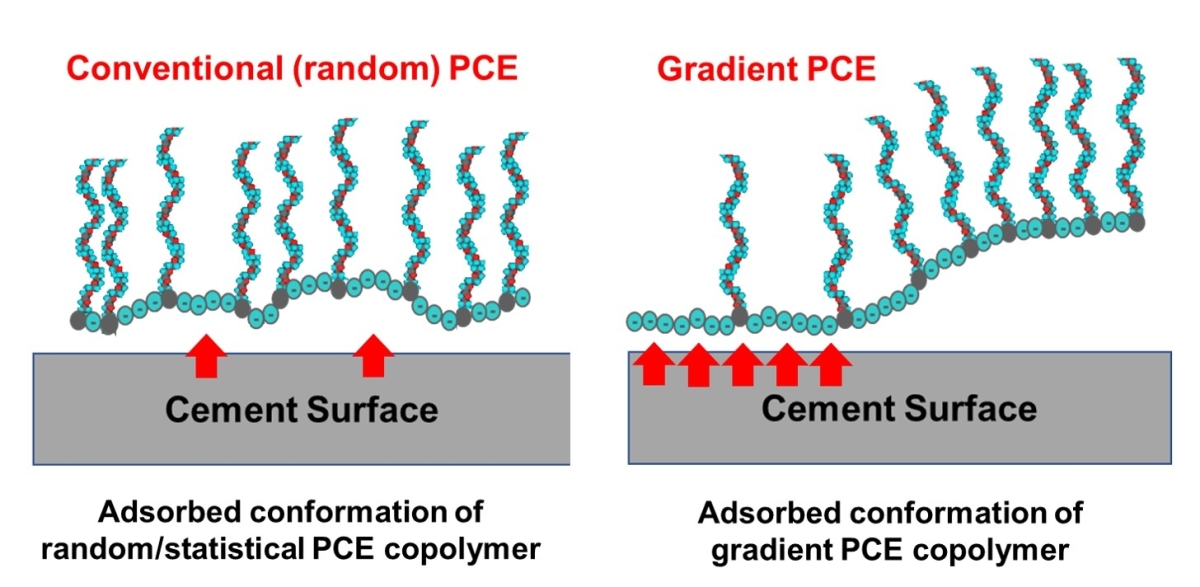
This presentation outlines the current state of development and shows that polycarboxylates (PCEs) with an acidic pH value, zwitterionic PCEs, and phosphate-modified PCEs, as well as gradient polymers of PCEs, are often superior to conventional statistical PCEs and highly effective even at an extremely low clinker ratio, such as 20%. In addition, this presentation discusses the use of a high limestone powder ratio. This is a cost-effective option, but it requires limestone with only minimal clay contamination. Smectites such as bentonite, for instance, can incorporate substantial amounts of PCEs into their layer structure, rendering them ineffective.
This lecture demonstrates that innovating for enhanced superplasticizer structures makes it possible to reduce the clinker ratio significantly while retaining the same degree of concrete workability and strength.