

Concrete blocks of the future – ideas and panel
discussion

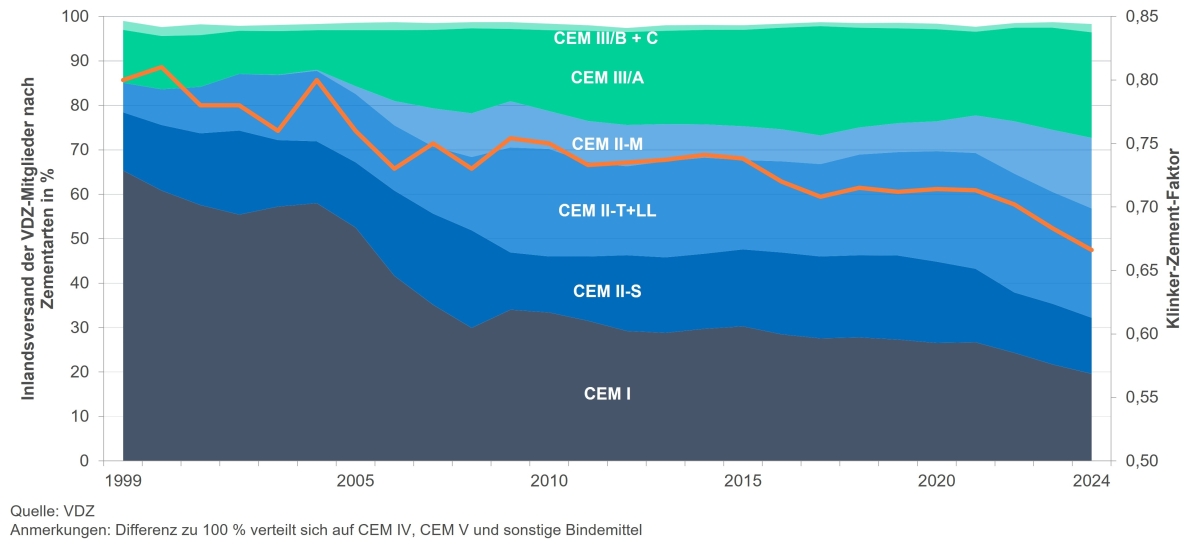
In Germany, the average clinker factor in cement was recently only 67% – a historically low value that underscores the industry’s progress toward climate neutrality. This development is remarkable because the average clinker content in the product portfolio has been more or less constant for several years. Above all, the dynamics of CEM II/C cements (ternary cements with a minimum clinker content of 50%) have led to a more significant reduction in the clinker factor. The clinker content in cement and concrete cannot be reduced in the same way in all areas of application for cement-bound building materials, as the requirements in different applications vary considerably. In its CO2roadmap, the VDZ assumed that the clinker factor could also be further reduced in concrete products. The extent to which this can be implemented in the manufacture of (in particular) two-layer concrete paving stones is currently being investigated in the IGF research project 01IF23352N in close cooperation between the VDZ and manufacturers of concrete products. In particular, it remains to be seen whether concrete paving stones with a low clinker factor can demonstrate sufficient resistance to frost and de-icing salt. In addition to clarifying technical performance, however, the public sector, for example, is also needed as an important driving force and role model for initiating green lead markets. To this end, the “Cement Carbon Class CCC” label was published by VDZ at the beginning of 2025, which gives cement manufacturers the opportunity to transparently disclose their CO₂ footprint to customers and in specifications in addition to product properties. The latter is externally audited by VDZ and verified by the label. Several labels have been awarded.