

Innovative connections with toothed high-performance steel interfaces

Highly efficient force transmission between precast
HPC sections

This new type of connection adds another option to the range of possible connections in precast reinforced concrete construction. Columns can be produced without interrupting the standard formwork due to the custom panel form. Columns can be placed more easily on the truck allowing for efficient transport because the components are joined on the construction site. This technique is also suitable for producing other connections in building construction, such as beam-to-column or modular truss joints.

Function

The new connection comprises two toothed steel components, with each of them being cast...

Related articles:

Issue 08/2017

Bolted column connection for seismic applications

1 Introduction The connections between precast elements play a fundamental role in the overall performance of the structure, representing a critical link where structural continuity is needed for...

more
Issue 03/2025

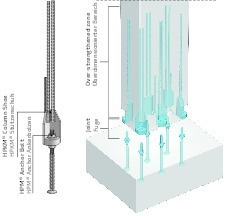
The Helka column shoe – Rethinking bolted connections for precast reinforced concrete columns

HPKM column shoes were developed more than 30 years ago, and Peikko is playing a pioneering role in this segment of bolted column connections. Bolted connections including HPKM column shoes and HPM...

more

Variable screw system: PSF column shoe system

The introduction of the stan­dards DIN 1055-4 wind loads and DIN 1045-1 reinforced concrete have increased the technical requirements in the field of structural engineering and the assembly of...

more
Advertorial / Advert

NEW: HELKA® Column Shoe – Robust and Optimized Bolted Column Connections

For over 30 years, Peikko’s innovative bolted column connections have defined the game for faster and safer column installation to high-quality precast beams. In 2024, we are excited to expand the...

more
Issue 01/2017 Peikko

New column connection for seismic-proof construction

Early precast designs showed less than perfect earthquake performance. Common reasons for the failures were inadequate detailing, poor workmanship and lack of continuity or redundancy in the...

more