
BCT-Technologie als alternatives Binderkonzept

30 % weniger C02

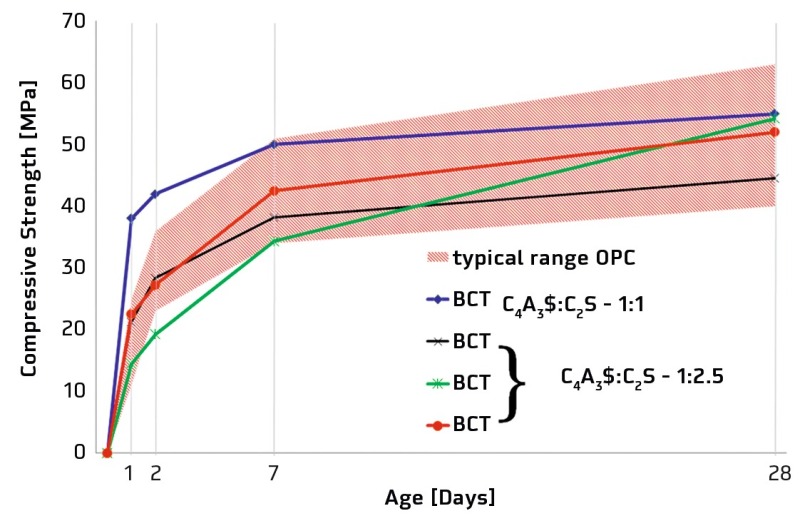
Ternesite, in cement technology most commonly known as sulfo-spurrite, has so far been assumed to be almost inert with respect to its reactivity in water. Researchers at the HeidelbergCement Technology Center recently discovered that ternesite actually is a reactive clinker phase. This discovery lays the basis of a novel innovative low-carbon clinker technology. The early age strength contribution of calcium-sulfo-aluminate (CSA) cements is combined with the durability of belite cements to result in this belite-calciumsulfoaluminate-ternesite (BCT) technology. In this system ternesite bridges...

Related articles:

Issue 05/2010 Sustainability starts from the building material

Study of micronized sand as a cement replacement

The environmental impact of infrastructure projects is becoming an increasingly important issue in engineering design. There is a growing pressure from governments and owners/clients to realize...

more
Issue 08/2025

Design approaches for sustainable concrete mixes and structural components (P. 1)

Changes in the current use of concrete materials and design approaches are mandatory in order to comply with the requirements imposed on future sustainable concrete structures. Before this background,...

more
Issue 05/2012

Hydration of ternary blended cement in the presence of PC type superplasticizer

When both calcium hydroxide (CH) and polycarboxylate type superplasticizers are added to Portland fly ash blended cement, the properties are changed considerably. Hydration of Portland cement blended...

more