



Designing structures for multiple lifetimes
How design for disassembly and reusable structural systems can support circular construction in precast and hybrid buildings
 © Peikko Group Corporation
For decades, buildings have been designed as permanent structures even though their functional life is often shorter than the lifespan of their materials. As the construction industry seeks ways to reduce carbon emissions and material waste, this mismatch is becoming difficult to justify. Circular construction is therefore shifting the focus from designing buildings for a single lifecycle to designing structural systems that can be dismantled, reused, and adapted for future projects.
© Peikko Group Corporation
For decades, buildings have been designed as permanent structures even though their functional life is often shorter than the lifespan of their materials. As the construction industry seeks ways to reduce carbon emissions and material waste, this mismatch is becoming difficult to justify. Circular construction is therefore shifting the focus from designing buildings for a single lifecycle to designing structural systems that can be dismantled, reused, and adapted for future projects.
Learning from nature
In nature, materials are constantly reused and transformed. Nothing is wasted; resources simply take on new forms and purposes over time. According to Ján Bujňák, Vice President of Product Development at Peikko, this principle offers a powerful lesson for the construction industry.
“Reuse is the natural state of things. Nature doesn’t waste; it transforms. At some point, humans learned to transcend the laws of nature, and we started to create more, instead of reusing.”
Applying this thinking to structural engineering means designing buildings that can adapt to future needs rather than ending their lifecycle with demolition.
Designing for disassembly
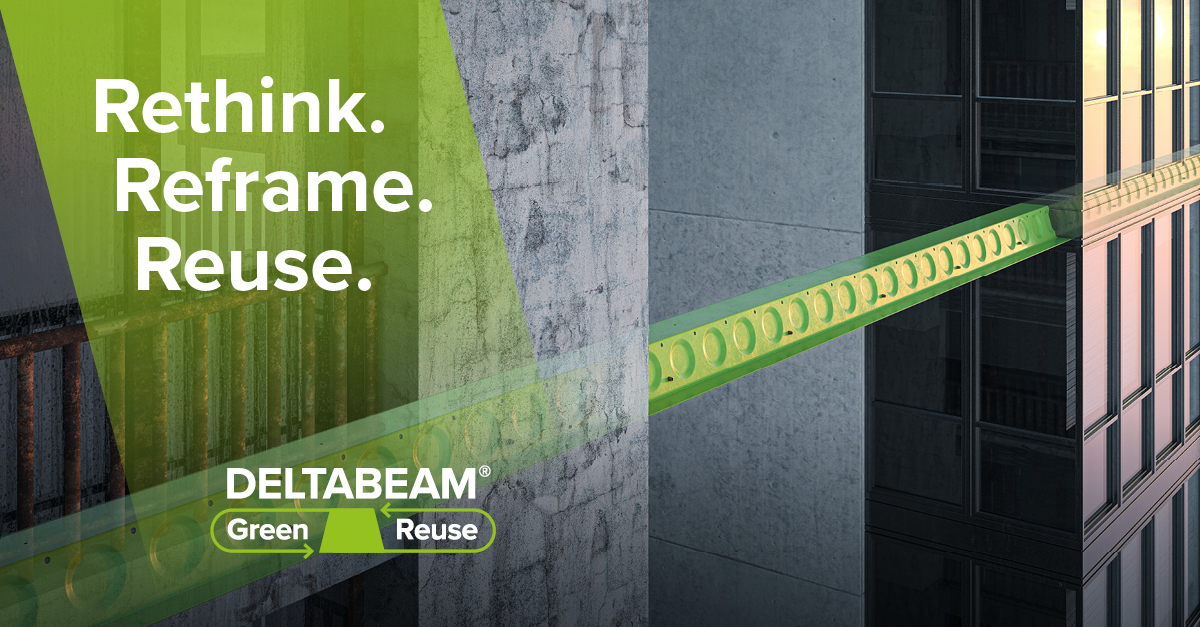
One example of this approach is DELTABEAM® Green Reuse, a slim floor composite beam solution designed specifically to enable structural reuse. The system combines the structural efficiency of slim floor construction with design principles that allow beams and slabs to be dismantled and reused in future buildings.
Bolted connections play a key role in this concept. By allowing structural elements to be assembled and later dismantled without damaging the components, the frame can be recovered and reused instead of being demolished. This approach transforms the structural frame from a single-use solution into a long-term resource for future projects.
From concept to practice
To demonstrate the feasibility of reusable structures, Peikko and precast manufacturer Consolis VBI launched a pilot project in the Netherlands. The partners designed and assembled a hybrid structural frame that could be built, dismantled, and reassembled multiple times.
The project demonstrated that design for disassembly works in practice within modern precast construction. By combining prefabricated slabs, composite beams, and mechanical connections, the structural frame could simulate multiple lifecycles without compromising structural performance.
A necessary mindset shift
Beyond technical feasibility, reusable structures represent a broader change in how the construction industry views materials and resources. As Jaakko Yrjölä, Senior Manager at Peikko, points out, resource scarcity is becoming a defining challenge.
“The problem is that we just keep doing more, and there’s a clear limit. We are taking too much from nature. That limit is our motivation to rethink how we build”.
Circular construction, therefore, requires more than new materials or technologies. It requires a shift in mindset across the entire construction value chain. By designing structures for multiple lifetimes, the industry can take an important step toward a more resource-efficient built environment.
Circular construction, therefore, requires more than new materials or technologies. It requires a shift in mindset across the entire construction value chain. By designing structures for multiple lifetimes, the industry can take an important step toward a more resource-efficient built environment.
More information