


Use of Polymer-modified Concrete in Bridge Construction –
Part I
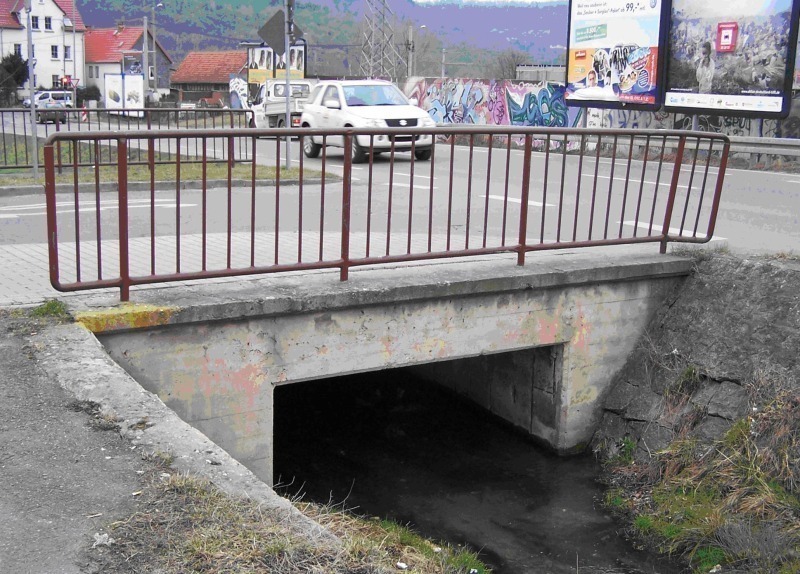
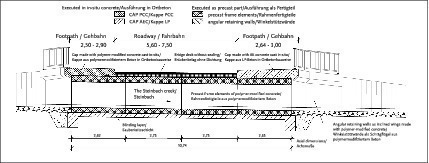
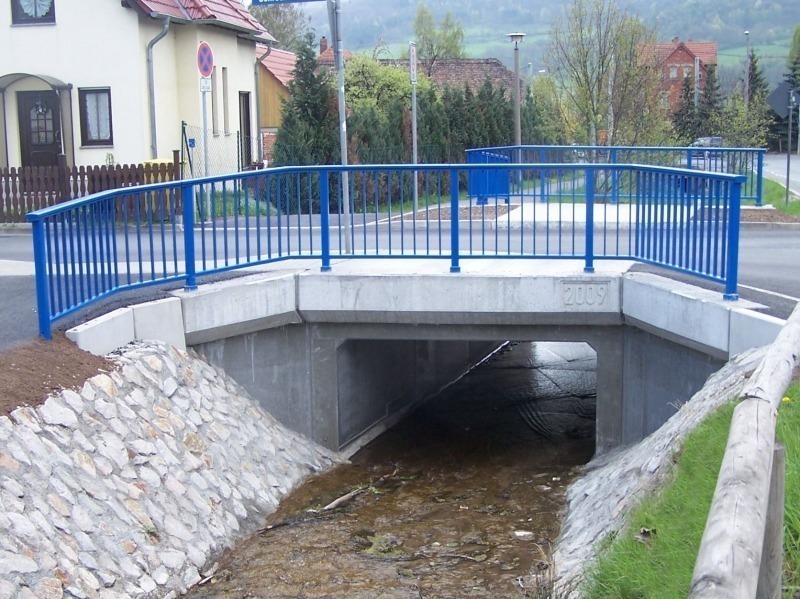





In May 2010, a bridge of polymer-modified concrete (PCC) was opened to traffic in the German city of Jena. The application of PCC as structural concrete in practice was made possible by 15 years of research in this field. Concrete mix designs could be determined to meet the specific requirements and in conformity with the standards. Special knowledge is required in particular for calculating the long-time behavior of the structure. As no confirmed detail knowledge is so far available in this area, a bridge was chosen whose geometry was primarily derived under structural aspects and which is subjected to only low loadings. In addition, the factors for describing the long-term behavior were considered with a high safety margin.
Fundamentals and Problem Formulation
The research examined the modification of mortar and concrete under different aspects. In Germany, PCC (Polymer Cement Concrete) is generally used in composite components and rehabilitation works as well as in the manufacture of industrial screeds and in road surfaces. These modifications are commonly achieved with thermoplastics. Mortars/concretes modified with epoxy resin (Epoxy Cement Concrete = ECC) are a special group. For these, the polyaddition of the epoxy (EP) resins to solid resin takes place in parallel to the hardening of the cement.
In the case...